Protein & Sports Nutrition

What’s this supplement everyone’s talking about? It's in coffee creamers, protein powders, beauty products, and at the center of countless wellness routines on social media. But despite all the buzz around collagen, many people still don't realize that collagen isn't just one thing.
Like most wellness trends, collagen only starts to feel relevant when it connects to something personal. Maybe your skin doesn't seem to bounce back the way it used to. Joints feel a little stiffer after workouts. Recovery takes longer than it once did. Or you're simply becoming more aware of how your body is changing with age.
Behind many of these changes is collagen—the structural protein that helps support skin, joints, bones, tendons, ligaments, and connective tissue throughout the body.
The important thing to understand is that different types of collagen support different structures and wellness goals. Some are more closely associated with skin and beauty support, while others are linked to mobility, recovery, connective tissue, and healthy aging.
Understanding those differences can make the supplement aisle feel far less overwhelming—and make it easier to choose a collagen routine that aligns with what you're actually trying to support.
What Is Collagen?
The body’s most abundant protein, collagen, provides structure, strength, and support throughout the skin, joints, bones, tendons, ligaments, blood vessels, and connective tissue.
Part of the reason collagen has become such a major wellness conversation is that it helps support the body’s firmness, flexibility, and resilience, particularly in areas people visibly notice first, including skin, hair, and nails.
When collagen production is functioning efficiently, skin tends to appear firmer, joints move more comfortably, and connective tissue maintains greater flexibility and resilience.
But collagen production gradually declines with age, beginning as early as the late 20s and early 30s. Over time, that decline can begin showing up in noticeable ways long before most people understand what's changing in their body.
Skin may begin looking dull and listless; fine lines may become more prominent; joints may begin feeling stiffer; and post-workout recovery may take longer.
This connection between hormones, collagen, skin, joints, and healthy aging is one reason collagen supplementation has become such a major part of conversations around wellness support today.
Benefits of Taking Collagen
The growing interest in collagen goes far beyond beauty trends. The potential benefits of taking collagen are connected to the many structural roles collagen plays throughout the body.
Hair, Skin, and Nails: Skin is often one of the first places people begin noticing collagen changes.1 Over time, it may start feeling thinner, less firm, or not quite as resilient as it once was. As collagen production naturally declines with age, these changes may become more noticeable over time, particularly in skin firmness, elasticity, and hydration.
Joints and Mobility: Cartilage relies heavily on collagen, which is one reason collagen supplements have become increasingly popular in conversations about mobility and joint support. For many active adults, movement and recovery simply begin feeling different over time, particularly after workouts or repetitive activity. This is one reason Type II collagen and UC-II® collagen products have become increasingly popular within mobility-focused wellness routines.
Bones and Structural Strength: Menopause is one reason bone health has become an increasingly important part of the collagen conversation. As estrogen levels decline, both collagen production and bone density naturally change, making structural support a growing priority for healthy aging. While calcium often dominates the bone health discussion, collagen also plays an important structural role. Because bone health relies on multiple nutrients working together, collagen is increasingly viewed as one piece of a broader healthy-aging approach rather than a stand-alone solution. We'll explore this idea in more detail later, but nutrients such as vitamin D, vitamin K, and magnesium are also commonly included in wellness routines designed to support long-term bone and structural health.
Gut Lining and Connective Tissue Support: Collagen is also found throughout connective tissue within the digestive tract. While collagen is not a treatment for digestive conditions, some people incorporate collagen peptides into broader digestive wellness routines because of collagen’s structural role within connective tissue throughout the digestive tract.
Recovery and Active Aging: Recovery starts to feel different with age, which is one reason collagen has become increasingly popular among active adults focused on mobility, movement, and long-term recovery support. However, collagen is not a complete protein on its own, which is why many wellness professionals recommend pairing it with broader recovery strategies rather than relying on it alone.
The Timeline of Collagen Decline
For most people, collagen decline happens gradually, so the changes can be easy to miss at first. Collagen production is typically at its peak in your 20s, helping support firm, resilient skin along with the joints and connective tissues involved in movement and recovery.
By your late 20s and 30s, collagen production begins to gradually decline. Early changes may show up as fine lines or subtle differences in skin hydration and elasticity. As collagen loss continues into your 40s, skin may appear thinner or less firm, while changes in joint comfort and recovery can become more noticeable.
For women, menopause can accelerate this timeline. As estrogen levels decline, collagen production also decreases. Research suggests women may lose up to 30% of their skin collagen within the first five years after menopause.² Changes in skin, joints, recovery, and bone health may become increasingly noticeable during this stage of life.
In your 50s, 60s, and beyond, collagen and skin elasticity continue to decline. Joint stiffness and slower recovery may become more common, while maintaining bone health and connective tissue becomes increasingly important as part of healthy aging.
Here’s how collagen production and its effects on the body can change across different stages of adulthood:

What Are the Different Types of Collagen?
Once people realize collagen affects much more than skin alone, the next question is usually whether all collagen supplements work the same way. The short answer is no. Different collagens support different structures throughout the body.
Though researchers have identified at least 28 collagen types within the body, five are most commonly associated with skin, joints, bones, cartilage, and connective tissue support.3 Understanding these distinctions can make it easier to choose a collagen supplement aligned with your individual goals.
Type I Collagen
Type I is the most abundant collagen in the body and the type most commonly associated with skin, hair, nails, and bones. Because it helps support skin elasticity, firmness, hydration, and bone structure, Type I collagen is commonly associated with beauty-focused and healthy-aging wellness routines.4 It also plays a major role in bone structure, making it an important part of healthy aging and long-term skeletal support.5
If you've used a collagen powder before, chances are it contained Type I collagen. Most collagen powders use hydrolyzed collagen peptides, which are broken down into smaller fragments that mix easily and are readily digested.
Type II Collagen
Type II collagen is found primarily in cartilage, which is why it appears so often in supplements designed to support joint comfort, mobility, and active aging. People looking to support movement, flexibility, and long-term joint health often seek out formulas containing Type II collagen rather than skin-focused collagen blends.
This category can sometimes be confusing because Type II collagen commonly appears in two forms: hydrolyzed collagen and undenatured UC-II® collagen. While both are associated with joint health, they work differently in the body and are used for different wellness goals.
Hydrolyzed Type II collagen is typically included in broader collagen formulas that support cartilage and connective tissue health. UC-II®, on the other hand, is a specialized form of undenatured Type II collagen often used in formulas focused specifically on joint comfort, mobility, and active aging.
Type III Collagen
Type III collagen works closely with Type I collagen and is found throughout the skin, blood vessels, organs, and other connective tissues. It helps provide structural support to these tissues, including the framework that contributes to healthy skin.
Because Types I and III naturally occur together in many areas of the body, Type III is often included alongside Type I in multi-collagen formulas designed to support skin, connective tissue, and broader healthy aging.
Type V Collagen
Compared with Types I and II, Type V collagen tends to fly under the radar. Still, it plays an important structural role. It helps organize collagen fibers and is found within connective tissues throughout the body.
Rather than being known for one specific benefit like skin elasticity or joint comfort, Type V helps support the structure and organization of the collagen network itself. That supporting role is one reason it may be included in multi-collagen formulas designed to provide a broader range of collagen types.
Type X Collagen
Type X collagen is most often associated with cartilage and developing bone tissue, where it plays a specialized role in bone formation and the transition from cartilage to bone.
Because of this connection to both cartilage and bone, Type X is most relevant to formulas designed around structural, joint, and bone support rather than beauty alone. It may be included in multi-collagen supplements alongside other collagen types to provide more comprehensive support for the tissues involved in mobility and healthy aging.

Specialized Collagen Ingredients
Understanding collagen types helps explain where collagen exists throughout the body. But when shopping for collagen supplements, you'll often encounter branded collagen ingredients. Rather than representing entirely new types of collagen, these specialized ingredients are proprietary forms of collagen that have been developed and studied for specific wellness goals.
VERISOL®
Type: Bioactive Type I Collagen Peptides
Best Known For: Skin elasticity, hydration, and beauty support
VERISOL® is a patented bioactive collagen peptide composed primarily of Type I collagen peptides. It has attracted attention for its potential to support firmer, better-hydrated skin, and soften the visible signs of aging. Because skin changes often become more noticeable during perimenopause and menopause, VERISOL® has become a popular ingredient in beauty-from-within collagen formulas.6
Together, these specialized collagen ingredients highlight an important point: not all collagen supplements are designed to support the same structures or wellness goals.
UC-II®
Type: Undenatured Type II Collagen
Best Known For: Joint comfort, mobility, and active aging
UC-II® is a patented form of undenatured Type II collagen derived from chicken sternum cartilage. It works differently than traditional collagen peptides in that it retains its natural structure during processing, instead of being broken down into smaller pieces. Researchers believe this distinctive structure drives how your joints respond to the ingredient.
FORTIGEL®
Type: Bioactive Collagen Peptides
Best Known For: Cartilage support, joint resilience, and exercise-related joint stress
FORTIGEL® is a specialized collagen peptide ingredient designed to support cartilage health. Research suggests it may help stimulate cartilage cells known as chondrocytes, supporting the body's natural cartilage-building processes. It is often used by active adults, athletes, and individuals focused on curbing long-term joint stress associated with a physically active lifestyle.
TENDOFORTE®
Type: Bioactive Collagen Peptides
Best Known For: Tendon, ligament, and connective tissue support
TENDOFORTE® is a collagen peptide ingredient specifically designed to support tendons and ligaments—the tissues that transfer force between muscles and bones, playing a key role in movement, stability, and recovery.
Connective tissues rarely get the same attention as muscles, yet they're involved in nearly every step, stretch, and workout we perform. Keeping your connective tissue healthy is an important part of staying active and comfortable over the years.
Collagen Works Better as Part of a Bigger Wellness Routine
One of the more sophisticated conversations happening around collagen today is the recognition that collagen does not work entirely in isolation.
The body relies on multiple nutrients to support collagen synthesis, connective tissue integrity, muscle recovery, mobility, and structural health over time. Increasingly, practitioners are viewing collagen less as a stand-alone beauty supplement and more as part of a broader healthy aging strategy.
Vitamin C, for example, plays a direct role in collagen production. Without adequate vitamin C, the body cannot efficiently synthesize collagen.
Vitamin D3 and K help support bone health and calcium utilization, which becomes increasingly important as collagen and bone density naturally change with age.
Magnesium, an essential mineral, supports muscle function, recovery, and structural processes throughout the body, while omega-3 fatty acids help support joint comfort and healthy inflammatory balance.
This “stacking” approach has become one of the more important shifts in how practitioners think about collagen supplementation. Instead of treating collagen as a stand-alone beauty supplement, it becomes part of a larger strategy focused on healthy aging, mobility, recovery, and structural support.
How to Choose the Best Collagen Supplement For You
The "best" collagen supplement depends less on trends and more on your goals. Skin support, mobility, recovery, and healthy aging all involve different structures throughout the body, which is why collagen routines are rarely one-size-fits-all. A more useful question than "What's the best collagen supplement?" is: "What kind of support am I looking for?"
For Joint Comfort, Mobility, and an Active Lifestyle
Type II collagen is the collagen type most closely associated with cartilage and joint health. Because cartilage is made primarily of Type II collagen, this form is often a great choice if you're focused on joint comfort, flexibility, mobility, and staying active as you get older.
If you'd like support for joint comfort and mobility while also supporting muscle recovery, StayStrong+ Joint and Muscle Collagen Powder—which contains a proprietary blend of type II collagen, creatine, and magnesium—may be a natural fit.

StayStrong+ Joint and Muscle Powder
Collagen, creatine, and magnesium powder for strength and joint health.*
For Strength, Recovery, and Healthy Aging
For strength, recovery, and healthy aging, Type I collagen is often a popular choice. Found throughout connective tissues in the body, Type I collagen helps support the tendons, ligaments, and other structures involved in movement, stability, and staying active over time.
If you live an active life, you've probably heard of creatine as well. Many adults combine collagen and creatine to support recovery, strength, and long-term wellness as part of a healthy-aging routine.
If your focus is recovery, performance, and healthy aging, StayStrong+™ Brain and Body Collagen Powder combines VERISOL® Type I collagen peptides and creatine as part of a daily wellness routine designed to support an active lifestyle.

StayStrong+ Brain and Body Collagen and Creatine Powder
Collagen + creatine powder for strength, energy, and cognitive support*
For Comprehensive Whole-Body Collagen Support
If you're looking for broad support across multiple areas of the body, no single collagen type does it all. Instead, a combination of collagen types may provide more comprehensive benefits. Type I collagen is commonly associated with skin and connective tissue, Type II collagen supports cartilage and joints, Type III collagen helps support connective tissues, while Types V and X collagen play specialized roles in tissue structure and cartilage-related functions.
If your goals include supporting your skin, joints, cartilage, tendons, ligaments, and connective tissue as part of a healthy-aging routine, a multi-collagen formula may make the most sense.
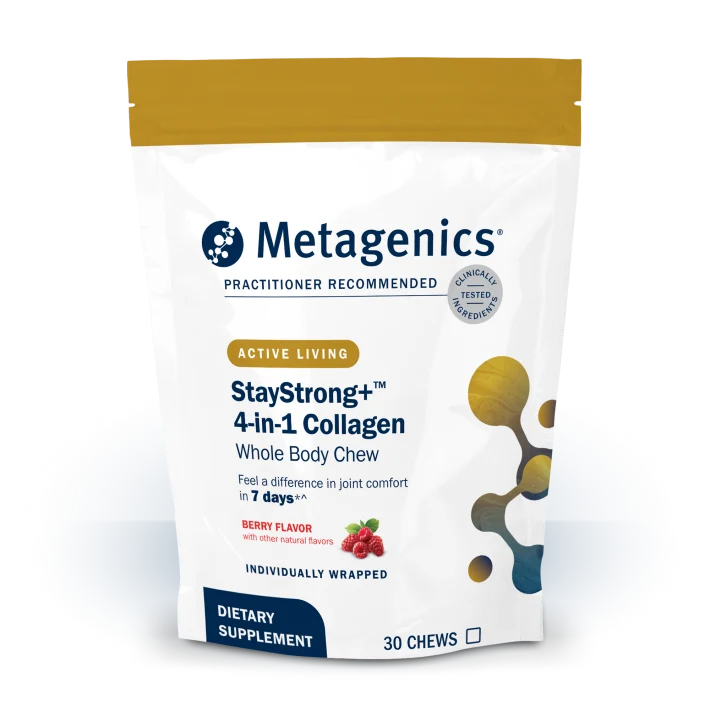
StayStrong+™ 4-in-1 Collagen Whole Body Chews combine four specialized collagen ingredients—UC-II®, FORTIGEL®, TENDOFORTE®, and VERISOL®—along with vitamin C to support multiple aspects of structural health in a single daily chew.

StayStrong+ 4-in-1 Collagen Whole Body Chew
Four types of collagen in one chew, supporting joints, movement, and skin.*
What If My Goal Is Hair, Skin, and Nail Support?
Many people first become interested in collagen because of changes they notice in their skin, hair, or nails. If that's your primary focus, Type I collagen is often the most relevant collagen type.
While the StayStrong+™ platform was designed to support strength, mobility, recovery, and healthy aging, StayStrong+™ Brain and Body Collagen Powder contains an adequate dose of VERISOL® Type I collagen peptides—the collagen type most widely recognized for its role in beauty-focused collagen routines.
For many adults, supporting healthy aging means thinking beyond appearance alone. Skin, joints, recovery, strength, and mobility are all connected, which is why many people choose a collagen routine that supports multiple aspects of wellness over time.
Conclusion
Collagen may be one of the biggest wellness conversations happening right now, but the growing interest goes far beyond beauty trends.
Different collagen types support different structures throughout the body, from skin and connective tissue to cartilage, mobility, and recovery. Understanding those differences can make choosing a collagen supplement feel far less overwhelming—and far more personal.
Whether you're focused on skin health, joint comfort, recovery, or comprehensive whole-body support, the best collagen supplement is ultimately the one that aligns with your individual goals and becomes part of a consistent long-term habit.

About the Author
Metagenics Medical Education Team
Healthcare Practitioners & Scientists
Our team of licensed health practitioners, clinical scientists, and nutrition experts creates and reviews content to ensure every article reflects current research, clinical expertise, and our commitment to scientific rigor—so you can trust what you read.
References
Kim DU, Chung HC, Choi J, et al. Oral intake of low-molecular-weight collagen peptide improves hydration, elasticity, and wrinkling in human skin: a randomized, double-blind, placebo-controlled study. Nutrients. 2018 Jul;10(7):826. Accessed 15 July 2026.
Thornton, M Julie. “Estrogens and aging skin.” Dermato-endocrinology vol. 5,2 (2013): 264-70. doi:10.4161/derm.23872. Accessed 15 July 2026.
"Collagen: What It Is, Types, Function & Benefits." Cleveland Clinic, 23 May 2022, https://my.clevelandclinic.org/health/articles/23089-collagen. Accessed 15 July 2026.
Sangsuwan W, Asawanonda P. Four-weeks daily intake of oral collagen hydrolysate results in improved skin elasticity, especially in sun-exposed areas: a randomized, double-blind, placebo-controlled trial. J Dermatolog Treat. 2020 Mar 9:1-6. Accessed 15 July 2026.
Ricard-Blum S. The collagen family. Cold Spring Harb Perspect Biol. 2011;3(1):a004978. Published 2011 Jan 1. Accessed 15 July 2026.
Kim DU, Chung HC, Choi J, et al. Oral intake of low-molecular-weight collagen peptide improves hydration, elasticity, and wrinkling in human skin: a randomized, double-blind, placebo-controlled study. Nutrients. 2018 Jul;10(7):826. Accessed 15 July 2026.
Browse Collagen Supplements
Collagen, creatine, and magnesium powder for strength and joint health.*
StayStrong+ Joint and Muscle Powder
4.3Collagen + creatine powder for strength, energy, and cognitive support*
StayStrong+ Brain and Body Collagen and Creatine Powder
4.6Four types of collagen in one chew, supporting joints, movement, and skin.*
StayStrong+ 4-in-1 Collagen Whole Body Chew
4.3