Vitamins & Minerals

Are multivitamins worth it? If you have ever stood in the supplement aisle feeling equal parts hopeful and skeptical, you are in good company. The headlines do not make it easier. One month a study says a daily multivitamin sharpens memory, and the next a panel of experts says the evidence for preventing disease just is not there. Both of those can be true at the same time, because they are answering very different questions.
As a naturopathic doctor, the answer I give is rarely a flat yes or no. It depends on the person in front of me: what their meals look like, where they are in life, which medications they take, and what their body is genuinely short on. So instead of crowning multivitamins a miracle or writing them off as expensive urine, this guide walks through how I think about the decision. We will look at why nutrient gaps are so common, what the research really says study by study, who tends to benefit, and how to tell a well-built formula from a forgettable one. By the end you should be able to make the call for yourself, which is the whole point.
Food First, but Rarely Food Only
Every naturopathic conversation about supplements starts in the same place: the plate. Whole foods deliver nutrients the way nature intended, bundled with fiber, enzymes, and hundreds of plant compounds that work together in ways a pill cannot fully copy. Vitamin C from oranges arrives with bioflavonoids. The iron in lentils comes alongside folate and fiber. That packaging matters, and no multivitamin replaces it.
What a multivitamin can do is cover the gaps a real, imperfect diet leaves behind. Even people who cook from scratch have uneven weeks, travel, skip meals, or simply dislike certain foods. Harvard's Nutrition Source has a useful phrase for this role, calling a standard multivitamin a form of nutritional insurance.1 That framing gets it right. A multi is not a treatment and it is not a license to eat poorly. It is a modest hedge against the days your food comes up short, which, if we are honest, is most weeks for most people.
Why Nutrient Gaps Happen, Even When You Eat Well
If someone eats reasonably well, how do they end up short on anything? Several forces are usually at work, and most are invisible on a day-to-day basis.
The food itself has changed. Comparisons of older and newer nutrient data suggest that some fruits and vegetables carry lower levels of certain minerals and vitamins than they did decades ago, a shift researchers link to soil depletion and crops bred for size and yield rather than nutrient density.2 Long storage times, shipping, and heavy processing chip away further at what reaches your fork.
Life stage raises the bar, too. Pregnancy, rapid growth, intense training, and aging all change how much of a given nutrient the body needs or how well it absorbs it. Chronic stress quietly burns through magnesium and B vitamins.3 And a detail many people never hear from the pharmacy counter: several common medications deplete specific nutrients over time. The diabetes drug metformin is well documented to lower vitamin B12 levels with long term use.4 Acid reducing medications can reduce absorption of B12, magnesium, and iron, and some diuretics pull out potassium and magnesium.5 None of this means stopping a prescribed medication, but it does mean the need for a particular nutrient can be higher than a food label would suggest.
Together, these forces explain why nutrient shortfalls show up even in people who feel they eat well. A broad multivitamin is one practical way to soften that reality.
Do Multivitamins Really Work? What the Research Shows
When people ask whether multivitamins really work, the honest reply is that it depends on the job you are asking them to do. Filling a nutrient gap, supporting a specific body function, and preventing a major disease are three separate questions, and the evidence lands differently on each. Here is what the research says:
Most of Us Fall Short on at Least One Nutrient
For all the abundance in a typical grocery store, a large share of adults still do not meet the recommended intake for several key nutrients. National nutrition survey data point to common shortfalls in vitamin D, vitamin E, magnesium, calcium, and vitamins A and C, and detailed analyses show that many people come up short on more than one of these at the same time.6,7 This is the clearest, least controversial case for a multivitamin. It is not about chasing a benefit so much as closing a gap that is already there.
Where the Research Is Genuinely Encouraging
Some of the more interesting recent work looks at the aging brain. In a large trial within the COSMOS research program, adults over 60 who took a daily multivitamin remembered more than those given a placebo.8 A follow up analysis that pooled three COSMOS cognitive studies came to a similar conclusion, reporting that daily multivitamin use supported cognition in older adults, with researchers describing the effect as modest but real.9
On disease, the longest running data come from the Physicians' Health Study II, which tracked more than 14,000 male doctors for over a decade. It recorded a small reduction in total cancer among the men taking a daily multivitamin, and a companion analysis found fewer cataracts.10,11 These findings are worth noting and worth keeping in proportion. They are meaningful, but they are not dramatic, and a multivitamin is nobody's primary defense against cancer.
The Major Studies at a Glance
The evidence is easy to cherry pick in either direction, so here is a balanced summary of the big studies side by side.
Study | Who was studied | Size | What it found | What it means for you |
COSMOS-Web8 | Adults 60 and older | About 3,500 | Better memory versus placebo | A daily multi may support memory as you age |
COSMOS cognitive analysis9 | Older adults, pooled trials | About 5,000 | Supported cognition overall | A consistent, if modest, brain health signal |
Physicians' Health Study II10 | Male physicians 50+ | Over 14,000, 11+ years | Modest drop in total cancer | Real but small; no replacement for screening or not smoking |
Physicians' Health Study II (eye)11 | Same cohort | Over 14,000 | Fewer cataracts | May support long term eye health |
USPSTF 2022 review12 | Healthy general adults | Evidence review | Insufficient evidence a multivitamin prevents heart disease or cancer | A multi is nutritional insurance, not disease prevention |
That last row is the one most often quoted out of context. In 2022, the US Preventive Services Task Force concluded there was not enough evidence to recommend multivitamins specifically to prevent heart disease or cancer in otherwise healthy adults.
In the same statement, it recommended against two high dose single supplements, beta carotene and vitamin E, citing a lack of benefit and, for beta carotene, a signal of possible harm in people who smoke.12 That is not a ruling against a balanced daily multivitamin at sensible doses. It is a caution against expecting a multivitamin to prevent disease, paired with a pointed warning about high dose single antioxidants, which are a different animal entirely.
So two questions tend to settle the matter for most people. First, are you likely to have a nutrient gap? Second, are you reaching for a balanced, standard dose formula rather than megadoses of one or two nutrients?
When both answers line up, a daily multivitamin is a low-risk way to cover your bases. It will not undo a smoking habit, a sedentary routine, or years of poor sleep, and it was never meant to.
Signs It May Be Worth a Closer Look
Nutrient gaps are often silent, which is part of why they persist. Still, a few everyday patterns can be a nudge to pay attention, especially when they cluster together: lingering fatigue that sleep does not fix, catching every cold that goes around, hair that sheds more than usual, brittle nails, low mood, or muscle cramps and twitches.13
None of these prove a deficiency on their own, since each has many possible causes. They are simply reasons to look closer rather than shrug it off. The most reliable next step is not a guess but a conversation with your provider and, where it makes sense, a blood test. More on that shortly.
The Everyday Benefits of a Multivitamin

Are multivitamins good for you in ordinary, day to day terms, setting disease prevention aside? This is where the clearest benefits of multivitamins lie in the quiet structure and function roles these nutrients play.
Filling Common Nutrient Gaps
This is the main event. A well formulated multivitamin lays down a broad base of vitamins and minerals so the days your diet falls short are covered.6 It is the least glamorous of the multivitamin benefits and easily the most important, because a nutrient your body never receives cannot do its job no matter how healthy the rest of your routine looks.
Supporting the Way You Turn Food Into Energy
The B vitamins act as coenzymes, the small helpers that convert the food you eat into usable cellular energy.14 When intake runs low, that conversion gets less efficient, which is one reason good B vitamin status supports normal energy metabolism. A multivitamin is not a stimulant and will not give you a jolt the way caffeine does. What it does is keep the machinery of energy production stocked with the parts it needs.
Supporting Immune and Bone Health
Several nutrients in a standard multi, among them vitamins D and C and zinc, have well established roles in normal immune function,15 while vitamin D, vitamin K, magnesium, and calcium each contribute to bone health.16 The theme here is cooperation. No single nutrient carries immunity or bone strength by itself, which is a large part of the argument for a broad formula over a drawer full of single bottles.
Nutrients Work as a Team
If there is one idea that separates how a naturopath thinks about a multivitamin from how a listicle does, it is synergy. Vitamins and minerals rarely act alone. They activate, balance, and depend on one another, and a good multivitamin is built around those relationships.
Vitamin D is a clear example. Before your body can use it, vitamin D has to be activated through steps that require magnesium, so someone low in magnesium may not get the full benefit of the vitamin D they take.17 Vitamin D also works hand in hand with vitamin K, which helps direct calcium toward bone and away from arteries.16
Iron is another: the body absorbs the plant form of iron far better in the presence of vitamin C, which is why a squeeze of lemon on your lentils is genuinely useful.18 Calcium and magnesium balance each other, and the B vitamins function as a family rather than solo acts.14 This is also the case for balance over brute force. Because some minerals compete for the same absorption pathways, loading up on a megadose of one can quietly crowd out another.18
A formula designed with these partnerships in mind tends to serve you better than a stack of mismatched single nutrients.
Who Tends to Benefit Most
A multivitamin is not equally useful for everyone. Some people are far more likely to carry the gaps a multi is designed to cover:
Anyone who could become pregnant, for whom adequate folate matters a great deal, ideally well before conception.19
Adults over 50, since the body's ability to pull vitamin B12 from food declines with age.20
People eating plant based, who can run low on B12, iron, and zinc, the nutrients most concentrated in animal foods.20
People eating less than they used to, including those on GLP-1 medications, where a smaller appetite can mean fewer total nutrients even when the food is healthy.
People with absorption challenges, such as celiac or inflammatory bowel conditions, a history of bariatric surgery, or medications that interfere with nutrient uptake.5
Those with higher demands, including endurance athletes, people under sustained stress, and anyone with heavy menstrual bleeding, which raises the need for iron.21
If you recognize yourself here, the case for a daily multivitamin gets stronger. If you eat a varied, generous diet and carry none of these risk factors, the case is weaker, and choosing to skip it is a perfectly defensible decision. Test, Do Not Guess
A core naturopathic principle applies to supplements as much as anything: personalize before you prescribe. Simple blood work can turn guesswork into a plan. A vitamin D level, ferritin for iron stores, and B12 are among the most informative and widely available markers, and the results sometimes redirect the whole conversation.
A person who assumed they needed a multivitamin may really need iron alone, or may discover their vitamin D is fine and their magnesium is not. Testing also protects you from doubling up. If you already take a standalone vitamin D or a B complex, adding a multivitamin on top can push certain nutrients higher than you intend. Bringing your actual bottles, not a vague description, to your provider is the simplest way to avoid that overlap.
How to Choose a Multivitamin Worth Taking
Once you decide a multivitamin earns a place in your routine, the quality of the formula matters as much as the decision itself. A handful of details separate a well-made multi from a forgettable one.
Start with the forms of the nutrients. Some vitamins have to be converted into an active form before the body can use them, and a meaningful share of people make that conversion inefficiently. A formula that already supplies folate as methylfolate and B12 as methylcobalamin hands your body the ready to use versions. The form of folate carries a second, underappreciated benefit: high doses of plain folic acid can mask the early blood signs of a B12 deficiency while nerve related symptoms quietly progress, a trap that activated folate at sensible doses helps you avoid.22 Minerals are easier to absorb in chelated forms, such as citrate or bisglycinate, than cheaper oxides.23
Next, favor balance over big numbers. A label boasting several thousand percent of everything is not a sign of a superior product, and as noted earlier, oversized single doses can interfere with other nutrients. Match the formula to you as well, since a menstruating woman and a postmenopausal woman have very different iron needs, and most men do not need added iron at all.21
Finally, look for transparency and independent testing, because supplements are not held to the same oversight as medications. Our guides on who regulates the supplement industry and what synthetic really means go deeper on both.

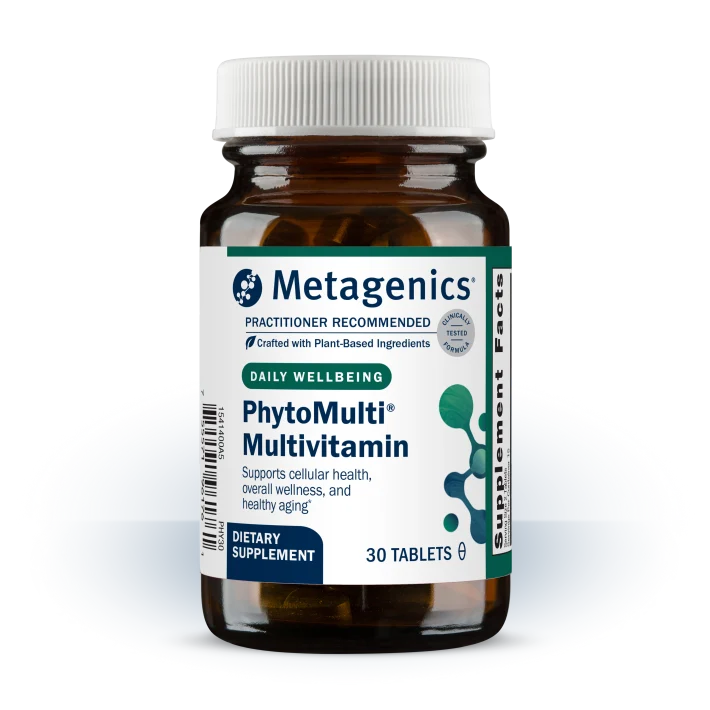
A formula like PhytoMulti shows what that looks like in practice. Alongside a comprehensive base of vitamins and minerals in bioavailable forms, including methylated folate and B12, it adds a 400 milligram blend of 13 concentrated plant extracts such as grape seed, green tea, blueberry, pomegranate, and resveratrol, chosen for cellular protection that a bare bones multi leaves out. The intent is to support several body systems at once rather than just meet minimums, which is where the "smart multi" idea comes from.

PhytoMulti® Multivitamin
Science-backed multivitamin for daily cellular health and overall wellness*
People who need iron can choose PhytoMulti with Iron, and anyone who would rather not swallow tablets can reach for the capsule version. The full range sits in the vitamins and minerals collection.
Quality behind the label counts too. Metagenics runs more than 200,000 quality tests each year, carries third party non-GMO certification on 98% of its ingredients, and manufactures in facilities with NSF and USP certification, as a certified B Corporation. Those are the kinds of proof points worth seeking out in any brand you plan to trust daily.
Getting the Most From Your Multivitamin
How you take a multivitamin shapes how much good it performs for you. A few habits help. Take it with a meal that contains a little fat, which improves absorption of the fat-soluble vitamins A, D, E, and K and tends to sit easier on the stomach than an empty one.24
Be mindful of timing around certain medications, since minerals like calcium and iron can interfere with thyroid medication and some antibiotics, so spacing them a few hours apart is wise.5 If a formula is split into two or three tablets a day, taking them with different meals keeps blood levels steadier and absorption higher.
Above all, consistency beats precision. The multivitamin that helps is the one you actually remember, so anchoring it to a meal you rarely skip, usually breakfast or lunch, does more than optimizing the perfect hour ever will.
A Few Safety Notes Worth Knowing
Multivitamins are low risk for most healthy adults, but a few situations call for a little extra care. If you take a blood thinner such as warfarin, the vitamin K in a multivitamin can affect how that medication works, so the dose needs to stay consistent and your provider should know.25
Iron deserves respect as well. It is valuable for those who need it and unnecessary, occasionally even counterproductive, for those who do not, which is why an iron free formula is the better default unless you have a reason for the added iron.21
Because the fat-soluble vitamins are stored rather than flushed out, stacking several products that each contain them can add up, another argument for knowing what is in everything you take. When in doubt, a quick review with your provider settles it.
The Bottom Line
So, are multivitamins worth it? For someone with a likely nutrient gap who picks a balanced, well made formula, a daily multivitamin is a sensible and low risk piece of nutritional insurance, with some encouraging signals for memory and everyday function on top.
For someone with an excellent diet and no risk factors, it may be optional, and that is a fine place to land. What a multivitamin cannot do is prevent disease on its own or paper over poor sleep, inactivity, or smoking. Thought of the naturopathic way, it is a supporting player: food, movement, sleep, and stress care carry the lead, and the right multi fills in around the edges.
If you choose to take one, choose it with the same care you would give any daily habit, and let it do the modest, useful job it is built for.
This article is educational and is not medical advice. A multivitamin is not a substitute for a balanced diet or for medical care. If you are pregnant, nursing, managing a health condition, or taking any medication, talk with your healthcare provider before starting a multivitamin, and ask whether a blood test would help pinpoint the gaps worth targeting for you.
References
Harvard T.H. Chan School of Public Health. The Nutrition Source: multivitamin. Accessed October 2026.
Davis DR, Epp MD, Riordan HD. Changes in USDA food composition data for 43 garden crops, 1950 to 1999. J Am Coll Nutr. 2004;23(6):669-682.
Pickering G, Mazur A, Trousselard M, et al. Magnesium status and stress: the vicious circle concept revisited. Nutrients. 2020;12(12):3672.
Aroda VR, Edelstein SL, Goldberg RB, et al. Long-term metformin use and vitamin B12 deficiency in the Diabetes Prevention Program Outcomes Study. J Clin Endocrinol Metab. 2016;101(4):1754-1761.
Mohn ES, Kern HJ, Saltzman E, Mitmesser SH, McKay DL. Evidence of drug-nutrient interactions with chronic use of commonly prescribed medications: an update. Pharmaceutics. 2018;10(1):36.
Bird JK, Murphy RA, Ciappio ED, McBurney MI. Risk of deficiency in multiple concurrent micronutrients in children and adults in the United States. Nutrients. 2017;9(7):655.
Lee S, Hamner HC, Ainsworth BE, et al. Inadequacy of immune health nutrients: intakes in U.S. adults, NHANES 2001-2016. Nutrients. 2020;12(6):1735.
Yeung LK, Alschuler DM, Wall M, et al. Multivitamin supplementation improves memory in older adults: a randomized clinical trial. Am J Clin Nutr. 2023;118(1):273-282.
Grima NA, Haskell-Ramsay CF, Thompson K, et al. Effect of multivitamin-mineral supplementation versus placebo on cognitive function in older adults: a randomized clinical trial and meta-analysis of three cognitive studies within COSMOS. Am J Clin Nutr. 2024;119(3):692-701.
Gaziano JM, Sesso HD, Christen WG, et al. Multivitamins in the prevention of cancer in men: the Physicians' Health Study II randomized controlled trial. JAMA. 2012;308(18):1871-1880.
Christen WG, Glynn RJ, Manson JE, et al. Effects of multivitamin supplement on cataract and age-related macular degeneration in a randomized trial of male physicians. Ophthalmology. 2014;121(2):525-534.
US Preventive Services Task Force; Mangione CM, Barry MJ, Nicholson WK, et al. Vitamin, mineral, and multivitamin supplementation to prevent cardiovascular disease and cancer: US Preventive Services Task Force recommendation statement. JAMA. 2022;327(23):2326-2333.
Tardy AL, Pouteau E, Marquez D, Yilmaz C, Scholey A. Vitamins and minerals for energy, fatigue and cognition: a narrative review of the biochemical and clinical evidence. Nutrients. 2020;12(1):228.
Kennedy DO. B vitamins and the brain: mechanisms, dose and efficacy. A review. Nutrients. 2016;8(2):68.
Maggini S, Pierre A, Calder PC. Immune function and micronutrient requirements change over the life course. Nutrients. 2018;10(10):1531.
van Ballegooijen AJ, Pilz S, Tomaschitz A, Grubler MR, Verheyen N. The synergistic interplay between vitamins D and K for bone and cardiovascular health: a narrative review. Int J Endocrinol. 2017;2017:7454376.
Uwitonze AM, Razzaque MS. Role of magnesium in vitamin D activation and function. J Am Osteopath Assoc. 2018;118(3):181-189.
Hurrell R, Egli I. Iron bioavailability and dietary reference values. Am J Clin Nutr. 2010;91(5):1461S-1467S.
National Institutes of Health, Office of Dietary Supplements. Folate: fact sheet for health professionals. Accessed October 2026.
National Institutes of Health, Office of Dietary Supplements. Vitamin B12: fact sheet for health professionals. Accessed October 2026.
National Institutes of Health, Office of Dietary Supplements. Iron: fact sheet for health professionals. Accessed October 2026.
Morris MS, Jacques PF, Rosenberg IH, Selhub J. Folate and vitamin B-12 status in relation to anemia, macrocytosis, and cognitive impairment in older Americans in the age of folic acid fortification. Am J Clin Nutr. 2007;85(1):193-200.
Kappeler D, Heimbeck I, Herpich C, et al. Higher bioavailability of magnesium citrate as compared to magnesium oxide shown by evaluation of urinary excretion and serum levels after single-dose administration in a randomized cross-over study. BMC Nutr. 2017;3:7.
Mulligan GB, Licata A. Taking vitamin D with the largest meal improves absorption and results in higher serum levels of 25-hydroxyvitamin D. J Bone Miner Res. 2010;25(4):928-930.
National Institutes of Health, Office of Dietary Supplements. Vitamin K: fact sheet for health professionals. Accessed October 2026.

About the Author
Dr. Malisa M. Carullo, ND, MSc
Naturopathic Doctor
Dr. Carullo serves as Senior Manager of Medical Information and Safety at Metagenics, where she supports clinical education, product safety, and evidence-based practitioner guidance across North America.
She holds a Doctorate in Naturopathic Medicine and a Master of Science in Biology, with a focus on chronic disease care, healthy aging, and evidence-based approaches to long-term wellness. Dr. Carullo is dedicated to empowering both practitioners and patients through clear, research-informed education that bridges science and everyday health decisions.
Frequently Asked Questions On Multivitamins
For most people, a daily multivitamin at standard doses is safe and does exactly what it is designed to do, which is help fill common nutrient gaps. Daily use is what lets it work, since nutrient levels build gradually. The main cautions are to steer clear of megadoses of single nutrients unless your provider recommends them, and to remember that a multi supports a good diet rather than standing in for one.
For most people, nothing dramatic right away, and that is normal rather than a sign it is not working. A multivitamin tops up nutrient levels quietly over weeks, so any benefit, whether support for energy metabolism or the correction of a real shortfall, tends to show up gradually. The clearest changes are usually felt by people who were genuinely low in a specific nutrient to begin with.
Indirectly, yes, though not the way a coffee does. Several B vitamins are essential for turning food into usable energy, so if you were running low on them, restoring normal levels can support more stable energy.14 A multivitamin does not add energy out of thin air, and persistent fatigue is worth investigating with your provider, since it can point to something specific like low iron, low B12, or a thyroid issue.
It comes down to your needs. A multivitamin is convenient and covers a wide base, which suits anyone wanting general insurance against everyday gaps. Individual nutrients make more sense when testing or your provider flags a specific, larger need, such as vitamin D or iron. Many people do well using a quality multi as a foundation and adding a single targeted nutrient only when there is a clear reason.
Look honestly at your diet and your circumstances. A limited or restricted diet, being over 50, the possibility of pregnancy, a smaller appetite, higher physical demands, or a condition that affects absorption all raise the odds of a gap. The most direct answer comes from your provider, who can order simple blood work and check for specific shortfalls rather than leaving you to guess.
With a meal, ideally one with a little fat, which helps the fat-soluble vitamins absorb and is gentler on the stomach.24 Past that, regularity matters more than the exact hour. Choosing a meal you rarely skip, often breakfast or lunch, and keeping it consistent will serve you better than hunting for an ideal time.
Multivitamins
PhytoMulti® Multivitamin
Science-backed multivitamin for daily cellular health and overall wellness*
4.8PhytoMulti® Multivitamin with Iron
Plant-based multivitamin with iron for energy, brain health, and daily immune support
4.8PhytoMulti® Multivitamin Capsules
Plant-based daily multivitamin for energy, brain, and immune support
4.6