Vitamins & Minerals

Tired of being tired? You are not alone, and you are not imagining it. If your coffee stopped working sometime around 3 p.m. and never fully clocked back in, you have probably typed some version of best energy supplements for chronic fatigue into a search bar, only to drown in a sea of ingredient names with no way to tell which one is for you. This guide fixes that.
Here is the honest framing up front. Supplements are not a magic switch, and no capsule replaces sleep, food, water, and movement. What the right nutrients can do is support the machinery your body already uses to make energy, especially when a genuine gap is holding you back. So rather than hand you another ranked list of vitamins for energy and tiredness to guess from, this article explains how your body produces energy, which nutrients support that process, and how to match a supplement to your specific kind of tired. By the end, you will know what to consider, in what form, and when to take it.
Why Am I Always Tired? Common Reasons Behind Daily Fatigue
Before reaching for a bottle, it helps to name the usual suspects. Everyday tiredness rarely has a single cause. More often it is a stack of small things:
Sleep debt. Not just too few hours, but broken or low-quality sleep that never lets you fully recharge.
Chronic stress. Running in a state of low-grade fight or flight is exhausting, and it quietly drains key nutrients.
Blood sugar swings. Meals heavy on refined carbs spike and crash your energy, leaving you flat by midafternoon.
Dehydration. Even mild fluid loss can register as fatigue and brain fog long before you feel thirsty.
Nutrient gaps. Low levels of iron, B vitamins, magnesium, or vitamin D can each leave you running on empty.
Too little movement. It sounds backward, but a sedentary body tends to feel more tired, not less.
Work through those first, because a supplement layered on top of four hours of sleep is a patch, not a fix. One more important note: if your fatigue is severe, persistent, or comes with other symptoms, it deserves a real evaluation.
Ongoing exhaustion can signal thyroid concerns, anemia, or a diagnosed condition such as myalgic encephalomyelitis, also called chronic fatigue syndrome or ME/CFS. Searches for CFS supplements often come from people navigating ME/CFS specifically, and it is worth saying plainly: these are medical matters to work through with your doctor, and supplements are not a treatment for them. This guide is about supporting everyday energy, not diagnosing or treating disease.
How Your Body Makes Energy and Where Nutrients Fit In
Here is the piece almost every listicle skip, and it is the key to everything else. Your body runs on a molecule called ATP, short for adenosine triphosphate. Think of ATP as the rechargeable battery your cells spend to do their work, from firing a thought to climbing the stairs. You make it around the clock inside tiny structures within your cells called mitochondria, often described as cellular power plants.
Now the important part: building ATP is a team effort, and several nutrients each play a distinct role on the assembly line.1 B vitamins act as the spark plugs, the coenzymes that help convert the food you eat into usable energy. CoQ10, short for coenzyme Q10, works deep inside the mitochondria, helping shuttle the reactions that generate ATP. Magnesium is the quiet enabler, because ATP only becomes biologically active when it is bound to magnesium, so without enough of it the battery cannot discharge properly. And iron ferries the oxygen your cells need to burn fuel efficiently in the first place.
See the pattern? These are not competing options where you pick a winner. They are members of the same crew, working on the same process. That is exactly why thoughtfully combined formulas often make more sense than grabbing a single ingredient and hoping it is the one you were missing. When people ask which single supplement is the answer for fatigue, the more accurate answer is usually that energy is a system, and you support the system. That mindset, matching nutrients to how your body makes energy, is what separates the best energy supplements for chronic fatigue from a random handful of pills.
The Best Vitamins and Supplements for Energy and Tiredness
With that system in mind, here are the nutrients worth knowing, each matched to a different kind of tiredness. Notice that the goal is never to take all of them. It is to find one or two that fit your situation.
B Vitamins: Foundational Support for Energy Metabolism
If there is a foundation for energy, it is the B vitamins. This family of eight works together as the coenzymes that turn carbohydrates, fat, and protein into cellular fuel, which is why a shortfall so often shows up as sluggishness.2 They are also depleted faster during periods of stress, the very time you can least afford to run low.
Here is the practitioner grade detail most guides miss: form matters. Some B vitamins have to be converted into an active form before your body can use them, and a meaningful share of people carry a common gene variant that makes that conversion inefficient. Choosing a formula with the activated forms already in place sidesteps the problem. Vitamin B Complex is built exactly this way, featuring folate as nature identical L-methylfolate and B12 as methylcobalamin, the ready to use forms, alongside the rest of the family plus choline and inositol. If low B12 specifically is on your radar, our guide to vitamin B12 deficiency is a useful companion.

Vitamin B-Complex
Complex B vitamin supplement featuring active methylfolate & B12.*
CoQ10: Supporting Cellular Energy Production
CoQ10 is where science becomes satisfying. Because it works inside the mitochondria to help generate ATP, it sits at the literal center of energy production, and research has looked at its role in supporting energy and reducing the sense of physical fatigue.3 Your body makes CoQ10 on its own, but natural levels tend to decline with age, which is why it earns particular attention for adults in their forties and beyond.
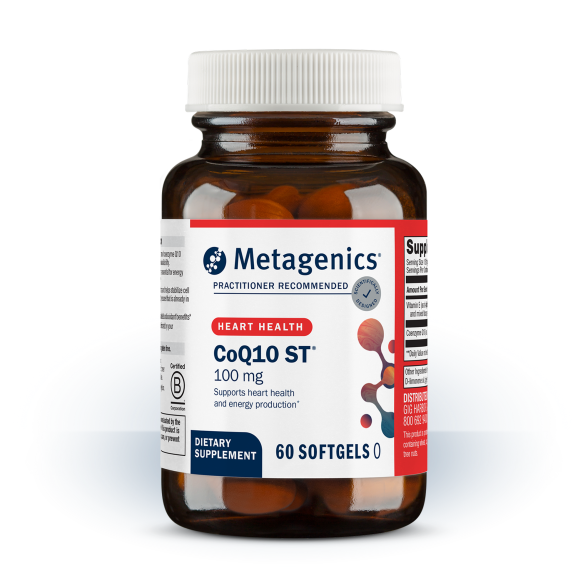
Set honest expectations here. CoQ10 is not a stimulant and you will not feel a jolt an hour after taking it. It works gradually, so give it several weeks of consistent daily use before judging it. CoQ10 ST 100 delivers 100 mg of CoQ10 as ubiquinone in a softgel. You can read more about who tends to benefit most in our overview of CoQ10 and who it is for.

CoQ10 ST®-100 mg
Fuel energy & support heart muscle function with absorbable CoQ10*
Magnesium: The Overworked Mineral Behind Energy and Rest
Magnesium is the multitasker of this list. It is involved in hundreds of reactions in the body, including the step that makes ATP usable, and it also helps calm the nervous system.4 That dual role makes it a standout for the tired but wired reader, the person who is exhausted yet somehow cannot switch off, or who sleeps poorly and wakes unrefreshed. Supporting magnesium can help quiet that background hum and improve sleep quality, which is its own form of energy support.5
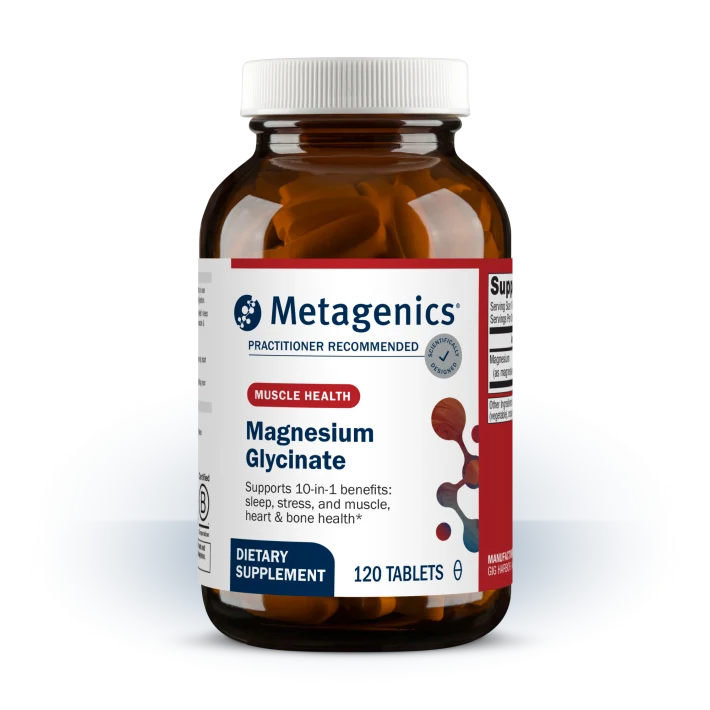
Form is where people get tripped up, so here is the simple version. Magnesium Glycinate uses magnesium bound to the amino acid glycine, which is gentle on the stomach and leans calming, making it a favorite for evening use and sleep. Magnesium Citrate is also well absorbed and tends to support regularity, a plus if digestion is sluggish. For a deeper look, see our guide on how much magnesium we need, or browse the sleep and magnesium collection.

Magnesium Glycinate
Highly absorbable magnesium supplement for muscle, nerve, sleep, & stress support.
Iron: When Low Levels Leave You Drained
Iron deserves a special, cautious mention, because low iron is one of the most common and most overlooked drivers of genuine fatigue, particularly in menstruating women, vegetarians, and endurance athletes. When iron is low, your blood cannot carry oxygen efficiently, and no amount of B vitamins will fix the tiredness that follows.6
But here is the firm rule: iron is test first, not guess first. Unlike the other nutrients here, iron can build up to harmful levels, so you should only supplement it if a blood test confirms you are low, ideally under your provider's guidance. If you and your doctor decide iron makes sense, the form still matters for comfort. Hemagenics uses iron as gentle, well absorbed iron bisglycinate, which is far less likely to cause constipation and stomach upset that give iron a bad name, and it pairs the iron with B6, B12, folate, and copper to support healthy red blood cells.

Hemagenics® Red Blood Cell Support Supplement
Supports the production & maintenance of healthy red blood cells.*
Adaptogens for Stress Related Tiredness: Ashwagandha and Rhodiola
If your fatigue is driven mostly by relentless stress, the nutrients above may only go so far, and this is where adaptogens come in. Adaptogens are herbs traditionally used to help the body cope with stress, and two stand out for stress related tiredness. Ashwagandha is calming and studied for supporting a balanced stress response and a sense of steadiness.7 Rhodiola is more energizing, studied for helping with physical and mental fatigue, especially the burned out kind.8
For a formula built around this idea, Adreset combines rhodiola with cordyceps and Panax ginseng, a trio of adaptogens standardized for consistency and designed to support resilience and stamina in people feeling worn down by stress.

Adreset®
Stress leaving you feeling drained? Support resilience & stamina with Adreset® adaptogen supplements
Vitamin D and Omega 3s: The Supporting Cast
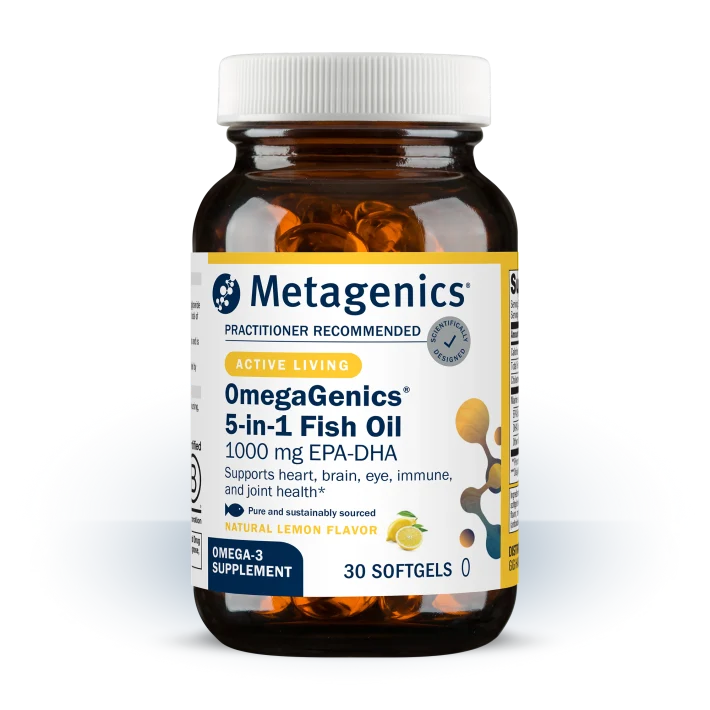
Rounding out the list are two nutrients that support overall vitality rather than energy directly. Low vitamin D levels are remarkably common, thanks to indoor lifestyles and limited sun, and research has connected low levels with a greater sense of fatigue, so it is worth having your level checked.9 Omega 3 fatty acids, the EPA and DHA found in fish oil, support the brain, heart, and a healthy inflammatory balance that underpins how well you feel day to day. A concentrated option like OmegaGenics 5-in-1 Fish Oil EPA and DHA 1000 provides 710 mg of EPA and 290 mg of DHA per softgel in an easily absorbed form. Neither is a fast fix for tiredness, but both help build the foundation that energy stands on.

OmegaGenics® 5-in-1 Fish Oil 1000 mg EPA-DHA
5-in-1 omega-3 fish oil supplement for heart, brain, eye, immune and joint health*
Ingredient Comparison: Match the Nutrient to Your Kind of Tired
With so many fatigue supplements on the shelf, the trick is not taking more of them but choosing the right one. Rather than take everything, use this table to zero in on what fits your situation.
If your tiredness feels like this | Look at | Why it fits |
Low energy despite decent habits, or you eat little meat | B vitamins | The coenzymes that convert food into cellular energy |
A slow, whole-body drain, especially past 40 years old | CoQ10 | Works inside mitochondria to help make ATP |
Tired but wired, tense, and sleeping poorly | Magnesium | Powers ATP and helps calm the nervous system |
Drained, pale, breathless, or heavy periods | Iron (following confirmed blood testing) | Carries the oxygen your cells burn for energy |
Worn down by ongoing stress | Adaptogens | Support the body's response to stress and stamina |
Low mood and low energy with little sun | Vitamin D and omega 3s | Supporting cast for overall vitality |
Choosing the Right Form: Standard Versus Bioavailable
One reason people feel let down by supplements is they choose to purchase a cheap, poorly absorbed form. This is where practitioner grade formulas earn their keep. A bioavailable version of a nutrient is one your body can use with little or no conversion, which can make a real difference.
Nutrient | Basic form | More bioavailable form | Who benefits |
Folate | Folic acid | L-methylfolate | People whose bodies convert folic acid poorly |
Vitamin B12 | Cyanocobalamin | Methylcobalamin | Anyone wanting the ready to use active form |
Magnesium | Magnesium oxide | Glycinate or citrate | Sensitive stomachs and anyone wanting better absorption |
Iron | Ferrous sulfate | Iron bisglycinate | Anyone prone to constipation or stomach upset |
The theme is simple: a smartly formulated supplement does some of the work for you, so more of what is on the label reaches the cells that need it.
A Simple Daily Routine: Morning, Afternoon, and Evening
Supplements work best woven into a rhythm you can adhere to, and timing can play to each nutrient's strengths. Here is a practical map.
In the morning, with breakfast, is the natural home for the energizing and foundational nutrients: your B vitamins, CoQ10, omega 3s, and iron if your provider has recommended it. Taking them with food supports absorption and comfort.
Through the afternoon, if stress and the mid-day slump are your pattern, adaptogens like those in Adreset fit here.
In the evening, as you wind down, magnesium glycinate is the calming choice, supporting the relaxation and sleep quality that tomorrow's energy depends on. For help making any of this stick, our piece on building habits that actually stick pairs well with the reset your routine campaign.
Final Thoughts
The best energy supplements for chronic fatigue are not a single miracle pill but the specific nutrients that support your body's own energy system, chosen to match the gap(s) you might have. The right supplement for fatigue and tiredness is the one that fills your actual gap, not the loudest label. Start with the foundations of sleep, food, hydration, and movement. Then, if a genuine shortfall remains, use this guide to match a supplement to your kind of tiredness, choose a well absorbed form, and give it consistent time to work. Support the system, involve your provider where it counts, and let the right nutrients help you feel less tired of being tired.
Best Energy Supplements Frequently Asked Questions
Start by matching the nutrient to the cause. B vitamins support energy metabolism across the board, magnesium suits the tired but wired and poor sleep pattern, CoQ10 supports cellular energy for those over 40, and iron matters if a blood test shows you are low. Adaptogens help when stress is the main driver. There is no universal answer, which is exactly why matching beats guessing.
If one category stands out, it is the B vitamins, since they are the coenzymes that convert food into usable cellular energy, and shortfalls are common. Vitamin D is a close second to have checked, because low levels are widespread and linked with a greater sense of tiredness. The best choice still depends on your individual gaps.
For everyday energy support, the strongest candidates are a quality B complex, magnesium, and CoQ10, each supporting a different part of how your body makes and uses ATP. Iron and vitamin D are worth adding only if testing shows you are low. Think of it as supporting a system rather than chasing a single stimulant.
Daytime sleepiness often stems from poor sleep quality or a nutrient gap, rather than a need for a quick energy boost. Taking magnesium glycinate in the evening can support deeper, more restorative sleep, which may help reduce next-day drowsiness. Correcting low iron, B12, or vitamin D may also help when these are the underlying issues.
It depends on the nutrient and whether you were genuinely low. Correcting a real deficiency in something like iron or B12 can bring noticeable change within a few weeks. CoQ10 and adaptogens generally need several weeks of consistent daily use before their support becomes apparent. Supplements reward patience and consistency, not a one-time dose.
References
1. Tardy AL, Pouteau E, Marquez D, Yilmaz C, Scholey A. Vitamins and minerals for energy, fatigue and cognition: a narrative review of the biochemical and clinical evidence. Nutrients. 2020;12(1):228.
2. Kennedy DO. B vitamins and the brain: mechanisms, dose and efficacy. A review. Nutrients. 2016;8(2):68.
3. Mizuno K, Tanaka M, Nozaki S, et al. Antifatigue effects of coenzyme Q10 during physical fatigue. Nutrition. 2008;24(4):293-299.
4. de Baaij JH, Hoenderop JG, Bindels RJ. Magnesium in man: implications for health and disease. Physiol Rev. 2015;95(1):1-46.
5. Boyle NB, Lawton C, Dye L. The effects of magnesium supplementation on subjective anxiety and stress: a systematic review. Nutrients. 2017;9(5):429.
Houston BL, Hurrie D, Graham J, et al. Efficacy of iron supplementation on fatigue and physical capacity in non-anaemic iron-deficient adults: a systematic review of randomised controlled trials. BMJ Open. 2018;8(4):e019240.
Chandrasekhar K, Kapoor J, Anishetty S. A prospective, randomized double-blind, placebo-controlled study of safety and efficacy of a high-concentration full-spectrum extract of ashwagandha root in reducing stress and anxiety in adults. Indian J Psychol Med. 2012;34(3):255-262.
Ishaque S, Shamseer L, Bukutu C, Vohra S. Rhodiola rosea for physical and mental fatigue: a systematic review. BMC Complement Altern Med. 2012;12:70.
Nowak A, Boesch L, Andres E, et al. Effect of vitamin D3 on self-perceived fatigue: a double-blind randomized placebo-controlled trial. Medicine (Baltimore). 2016;95(52):e5353.

About the Author
Dr. Malisa M. Carullo, ND, MSc
Naturopathic Doctor
Dr. Carullo serves as Senior Manager of Medical Information and Safety at Metagenics, where she supports clinical education, product safety, and evidence-based practitioner guidance across North America.
She holds a Doctorate in Naturopathic Medicine and a Master of Science in Biology, with a focus on chronic disease care, healthy aging, and evidence-based approaches to long-term wellness. Dr. Carullo is dedicated to empowering both practitioners and patients through clear, research-informed education that bridges science and everyday health decisions.
Best Energy Supplements For Chronic Fatigue
Complex B vitamin supplement featuring active methylfolate & B12.*
Vitamin B-Complex
4.5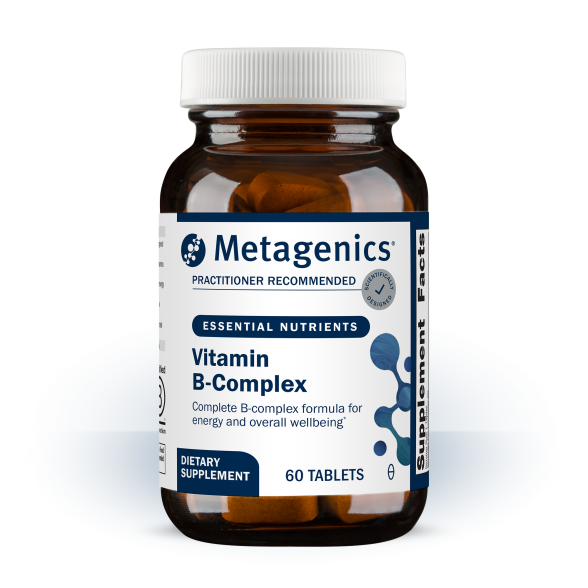
- 4.8
Supports healthy muscle function.*
Magnesium Citrate
4.5Supports the production & maintenance of healthy red blood cells.*
Hemagenics® Red Blood Cell Support Supplement
4.3Supports strong bones, heart health, and immune system
Vitamin D3 10,000 + K
4.85-in-1 omega-3 fish oil supplement for heart, brain, eye, immune and joint health*
OmegaGenics® 5-in-1 Fish Oil 1000 mg EPA-DHA
4.6