
Digestion & Probiotics

Walk down any supplement aisle and the pattern is unmistakable. Shelf after shelf of bottles competing on a single number, each promising to resolve your bloating, your digestion, your everything. So which is the best probiotic for gut health? The honest answer is the one no label will print. There is no universally best probiotic. There is only the one matched to what your gut is actually asking for.
As a naturopathic doctor, this is among the most common places I watch people spend money in the wrong direction. They select the bottle with the largest number on the front, take it for a month, register nothing, and conclude that probiotics do not work for them. The probiotic was rarely the problem... The match was. Identifying the best probiotics for gut health has less to do with chasing potency than with selecting the specific strain studied for your goal, whether that is easing bloating, restoring regularity, calming an irritable gut, or recovering after antibiotics.
What follows is how probiotics actually work, how to read past the marketing, and how to match a strain to what your body is signaling.
What Probiotics Actually Do for Your Gut
Trillions of bacteria, yeasts, and other microorganisms populate your digestive tract. Collectively they form your gut microbiome, an ecosystem whose health depends far less on population size than on variety. The most resilient ecosystems are not the most crowded ones. They are the ones where many species occupy distinct niches and cover for each other when conditions shift. Yours behaves the same way, and it falters when a narrow few come to dominate.1
Probiotics are live beneficial microorganisms that, taken in sufficient quantity, support that ecosystem.2 They are not an intervention imposed from outside. They are reinforcement for populations you already have.
Some of what those organisms accomplish:
They compete for territory. Beneficial bacteria contest space and nutrients with less helpful organisms, leaving fewer openings for the ones that generate gas and discomfort.
They produce short chain fatty acids. As gut bacteria ferment dietary fiber, they generate compounds called SCFA (short chain fatty acids), the primary fuel for the cells lining your colon and a significant contributor to the integrity of the gut wall.3
They calibrate immune function. Roughly seventy percent of immune tissue resides in and around the gut.4 A balanced microbiome helps that system respond proportionately rather than reflexively.5
They support digestion and transit. Particular strains influence how efficiently and how comfortably food moves through you.

DID YOU KNOW? Probiotics generally do not take up permanent residence. Most transit through, exerting their effects while present, which is precisely why consistency determines results.6 This is cultivation rather than installation.
Signs Your Gut Might Need Support
No laboratory test is required to recognize compromised digestion. The body reports it. Among the signals I encounter most often in practice:
Bloating or fullness that persists well after meals
Gas disproportionate to what you ate
Irregularity, whether constipation, loose stools, or alternation between them
Digestion visibly disrupted following a course of antibiotics
Falling ill more frequently than seems warranted
Food reactions or sensitivities that appear to be accumulating
No single item confirms dysfunction. In combination, or when they persist, they generally indicate a microbiome that has lost some measure of balance. This is where a deliberately chosen probiotic supplement for digestive health earns its place, ideally alongside the dietary and lifestyle inputs that sustain beneficial populations in the first place.
WHEN TO CHECK IN WITH A PROVIDER
Severe symptoms, blood in the stool, unexplained weight loss, or pain that wakes you at night fall outside what any supplement addresses. These warrant medical evaluation rather than a probiotic decision.
Why the Strain Matters More Than the CFU Count
This is where probiotic selection most often goes wrong, so it is worth slowing down.
Every probiotic label carries a CFU count. CFU stands for colony forming units, which denotes the number of live, active organisms per dose. A label might claim 10 billion, 50 billion, or 100 billion. Larger appears superior. Larger is not automatically superior.
Consider the logic. Faced with a failing pipe, you would not engage fifty people at random in the hope that one understood plumbing. You would engage one qualified plumber. Probiotics operate on the same principle. A precisely characterized, clinically studied strain at an appropriate dose will generally outperform a substantially larger quantity of generic organisms never studied for your objective.
That word, strain, carries the weight. Every probiotic is identified by three components, and the third is where the evidence lives.
GENUS Lactobacillus | → | SPECIES rhamnosus | → | STRAIN GG |
Read it as a name. The genus is the family, the species narrows the identification, and the strain designates the specific organism carrying its own body of research.
Lactobacillus rhamnosus GG is therefore a single, specific organism. It has been studied in isolation, and its documented benefits belong to that strain rather than to every Lactobacillus on the shelf. Published probiotic research is nearly always conducted on one named strain. Substitute the strain and the evidence no longer applies.7 This is why strain identity is not a technicality, and why credible products specify their organisms down to that final designation, whether Bi-07, HN019, or 299v.
It also explains why single strain versus multi-strain is not a question with a universal answer. A single strain formula offers a targeted, well characterized tool for one job. A multi-strain formula offers broader coverage across the digestive tract. The right choice follows from your objective.
So when comparing products, look past the figure on the front and ask two better questions. Which strains are in here? And were those strains studied for the outcome I care about?
Best Probiotic Strains for Gut Health, Matched to Your Goal
This is the reference I wish accompanied every bottle. Below is a plain language map of well characterized probiotic strains, what each is best documented for, and where each tends to fit. Treat it as an orientation, then bring your particular situation to your practitioner.
Strain | Best for | Typical form | Typical daily dose |
Lactobacillus rhamnosus GG | Everyday digestion, support during and after antibiotics, early life immune resilience | Capsule, liquid | 5 to 20 billion CFU |
Lactobacillus rhamnosus HN001 | Immune support, early life allergy and eczema research | Capsule | 5 billion CFU and up |
Bifidobacterium lactis (Bi-07, HN019, Bl-04) | Regularity, bloating, immune support | Capsule | 1 to 15 billion CFU |
Lactobacillus acidophilus NCFM | Broad daily digestive and immune support | Capsule | 5 to 15 billion CFU |
Lactobacillus plantarum 299v | Bloating, gas, gut barrier, irritable gut, stress response | Capsule | 10 to 20 billion CFU |
Saccharomyces boulardii | Loose stools related to antibiotics or travel | Capsule | 5 billion CFU and up |
Bacillus species (spore forming) | Resilient daily support, regularity, family use | Gummy, powder, capsule | Varies by strain |
Bifidobacterium lactis B420 | Metabolic and gut support, increased short chain fatty acids | Capsule | 10 billion CFU |
Akkermansia muciniphila MucT (pasteurized) | Gut barrier and lining support | Capsule | Strain specific |
The standouts warrant closer examination:
Lactobacillus rhamnosus GG: Digestion, Antibiotics, and Allergy Research
Lactobacillus rhamnosus GG, commonly abbreviated LGG, ranks among the most extensively studied probiotic strains in existence.8 It is a dependable choice for everyday digestive support and is particularly well documented for helping the gut withstand a course of antibiotics, when beneficial populations sustain collateral damage. Its research record for supporting comfortable digestion in children and reinforcing immune function is substantial.
The L. rhamnosus family also anchors some of the more consequential early life allergy research. A landmark study following infants for more than a decade found that administering a specific L. rhamnosus strain, HN001, directly to infants reduced eczema risk by approximately half by age two, with the protective effect still detectable years afterward.9 One detail from that work deserves emphasis: dosing the infant directly is what produced the result. It is a clear demonstration of how a single well characterized strain can carry implications well beyond digestion.
Metagenics includes LGG in family formulas such as UltraFlora Baby and the high diversity UltraFlora BiomePro, with the closely studied HN001 strain in UltraFlora Acute Care.
Bifidobacterium lactis and B. longum: Regularity and Bloating
When the primary complaint is that transit is neither smooth nor predictable, the Bifidobacterium family is generally where I look first. B. lactis strains, including Bi-07, HN019, and Bl-04, are well documented for supporting regularity, easing that distended and heavy sensation, and reinforcing immune function.10 The pairing of L. acidophilus NCFM with B. lactis Bi-07 in particular carries research in both adults and children, including work demonstrating fewer sick days among children and support for comfortable, balanced digestion.11 Across the UltraFlora range, the Bifidobacterium strains appear in the following formulas:
B. lactis Bi-07: UltraFlora Balance, UltraFlora Kids, UltraFlora IB, UltraFlora Synergy, UltraFlora Spectrum, UltraFlora Restore, and UltraFlora BiomePro
B. lactis HN019: UltraFlora Acute Care and UltraFlora BiomePro
B. lactis Bl-04: UltraFlora Spectrum, UltraFlora Restore, and UltraFlora BiomePro
B. longum (strain ES1, delivered as a heat treated postbiotic): UltraFlora Night Rest and Digest, for overnight digestive comfort
UltraFlora Balance, which delivers 15 billion CFU of NCFM and Bi-07, remains my usual starting point for someone new to probiotics seeking steady everyday support.

UltraFlora® Balance Probiotic
Helps keep your gut balanced with 15 billion CFUs in each capsule*
Lactobacillus acidophilus: Broad Everyday Support
If probiotics have a public face, it belongs to Lactobacillus acidophilus. The NCFM strain specifically is among the most thoroughly investigated probiotics in existence, examined across hundreds of publications for digestive comfort, microbial balance, and immune support.12 It is a dependable broad daily choice, and part of why UltraFlora Balance remains such a steady recommendation. Within the UltraFlora range, NCFM is a component of UltraFlora Balance, UltraFlora Kids, UltraFlora IB, UltraFlora Synergy, UltraFlora Spectrum, UltraFlora Restore, and UltraFlora BiomePro. One distinction worth drawing: NCFM is not interchangeable with every L. acidophilus on a label.
The acidophilus in UltraFlora Complete Women's, for instance, is the DDS-1 strain, studied for different outcomes. Strain designation, once again, is what carries the evidence.

UltraFlora® Complete Women's Probiotic
5-in-1 Women’s Probiotic for Vaginal & Urinary Health, Gut Balance, Immune Support & Emotional Wellbeing
Lactobacillus plantarum 299v: Irritable Gut, Bloating, and Stress
For those contending with the cramping, bloating, gas, and unpredictability of an irritable gut, Lactobacillus plantarum 299v is among the more compelling single strains available. It carries research specifically for easing irritable gut symptoms,13 and here is the detail I find most instructive as a clinician: a different L. plantarum strain tested under comparable conditions did not produce equivalent relief.14 That is strain specificity demonstrated rather than asserted. The particular organism matters, not the species printed on the label.
299v extends beyond digestion. Given the continuous exchange between gut and brain, this strain has also been studied for its role in the stress response, with research pointing to effects on stress related biochemistry and mood.15 A separate trial found improvements in mood and vigor when 299v was combined with iron in physically active women.16 For anyone whose gut deteriorates precisely when life intensifies, that intersection is worth understanding.
Metagenics features L. plantarum 299v in UltraFlora Intensive Care.

UltraFlora® Intensive Care Probiotic
Support for intestinal distress and bowel discomfort.*
Saccharomyces boulardii: Antibiotic and Travel Related Loose Stools
A useful anomaly: Saccharomyces boulardii is not a bacterium. It is a beneficial yeast, which confers a distinct practical advantage. Because it is a yeast, antibiotics do not act on it. That makes it a natural choice for supporting the gut during and after a course of antibiotics, and for the loose stools that accompany travel to unfamiliar environments. Its research record is among the deepest of any probiotic, including analyses pooling many trials across both adults and children.17
Metagenics builds S. boulardii into UltraFlora Acute Care for short term targeted support, and into UltraFlora Spectrum, a broad seven strain daily formula for those seeking wide coverage across the digestive tract in a single capsule.

UltraFlora® Acute Care Probiotic
Relieves occasional diarrhea and acute bowel distress*
Bifidobacterium lactis B420: Metabolic and Gut Support
Bifidobacterium lactis B420 is a live strain with a research profile entirely its own, distinct from the Akkermansia it is sometimes paired with. In a six month randomized controlled trial in overweight and obese adults, B420 at 10 billion CFU reduced body fat mass, waist circumference, and energy intake, with the benefit associated with an improvement in a marker of gut barrier integrity.18 Because it is a living organism, B420 establishes and acts in the gut the way other probiotic bacteria do, which is precisely why its evidence should not be conflated with that of the pasteurized organism it sometimes accompanies.
Metagenics uses live B420 in UltraFlora Control, a standalone metabolic formula, and pairs it with pasteurized Akkermansia in UltraFlora Triplebiotic.

UltraFlora® Control Probiotic
Shown to help control body fat and body weight
Akkermansia muciniphila MucT™ (Pasteurized): Gut Barrier Support
Akkermansia muciniphila resides in the mucus layer of the intestinal lining and is closely associated with the integrity of the gut barrier, the interface determining what is absorbed and what is excluded. Here a distinction matters that marketing frequently blurs: the Akkermansia in Metagenics formulas is pasteurized, not live, and that difference is mechanistic rather than incidental. Pasteurization does not simply preserve the organism. In preclinical work it actually enhanced Akkermansia's metabolic effects, and much of the benefit traces to a single outer membrane protein, Amuc_1100, which is stable at pasteurization temperatures, engages Toll like receptor (TLR) 2, and reinforces the gut barrier.19 A human proof of concept study using the pasteurized form supported improvements in metabolic markers alongside a favorable safety profile.20
Metagenics delivers pasteurized Akkermansia (MucT) in UltraFlora Triplebiotic, built around gut barrier support with added prebiotic fiber, and in UltraFlora Healthy Weight with Akkermansia, formulated for metabolic and weight management support.

UltraFlora® Triplebiotic with Akkermansia
Triple action gut support with pre, pro, and postbiotic. Microbiome, gut barrier and immune health support.
A note on women's health. Certain strains, particularly Lactobacillus species such as GR-1 and RC-14, are studied specifically for vaginal and urinary support rather than digestion. If that is the objective, select a formula designed for it, such as UltraFlora Women's or the five in one UltraFlora Complete Women's, rather than a general digestive probiotic.
A Note on Spore Based and Soil Based Probiotics
You may have encountered probiotics marketed as spore based or soil based and wondered what distinguishes them.
Most probiotic organisms are fragile. Spore forming probiotics, generally Bacillus species, produce a durable protective structure functionally comparable to a seed coat. That structure allows them to withstand heat, gastric acid, and extended shelf time without specialized coatings or refrigeration. On reaching the hospitable environment of the intestine, they germinate and become metabolically active.21 This inherent durability explains their popularity for daily and family use, and why they travel particularly well.
Metagenics offers spore-based support in several formats. UltraFlora 3 in 1 Daily is a chewable gummy built on spore forming Bacillus strains with prebiotic fiber, making it an accessible family option for digestive, immune, and cardiovascular support. For regularity and occasional bloating, UltraFlora Fiber, Prebiotic and Probiotic combines a spore forming strain with soluble fiber in a straightforward daily powder.
Prebiotics, Probiotics, and Synbiotics: Why Pairing Them Works

Labels rarely explain this well. Probiotics are the beneficial organisms. Prebiotics are what those organisms consume.
Prebiotics are specific fibers your own enzymes cannot digest but your beneficial bacteria metabolize preferentially.22 If probiotics are the seed stock, prebiotics are the soil amendment. Introducing one without the other leaves the work half finished.
So why select a formula containing both? Clinically, it reduces to giving beneficial organisms the best available conditions to establish and persist. When a probiotic arrives in the gut accompanied by the exact substrate it preferentially consumes, fuel is waiting on arrival rather than contingent on what happened to be on your plate that day. A product combining the two is termed a synbiotic, meaning the probiotic and the prebiotic that sustains it, delivered together.23 For many people, particularly those whose daily fiber intake is inconsistent, that pairing is an efficient way to support the system from both directions simultaneously.
Metagenics offers this pairing in several formats. UltraFlora Fiber, Prebiotic and Probiotic combines beneficial organisms with soluble fiber in a daily powder aimed at regularity and comfort. UltraFlora Synergy pairs the well characterized NCFM and Bi-07 strains with prebiotic fiber in a mixable powder. And UltraFlora Triplebiotic layers live B420, prebiotic fiber from chicory, and pasteurized Akkermansia for gut barrier support.
The Full UltraFlora Family, Matched to Your Goal

Since the appropriate probiotic follows from your objective, here is a map of the UltraFlora gut health range showing where each formulation fits. Bring it to your practitioner as a starting point.
Your goal | Formula | Key strains | Form |
Everyday foundation | UltraFlora Balance | NCFM, Bi-07 | Capsule |
Broad daily coverage | UltraFlora Spectrum | 7 strains incl. S. boulardii | Capsule |
Rebuild after disruption | UltraFlora Restore | NCFM, Bi-07, Bl-04, Lpc-37 | Capsule |
Maximum diversity | UltraFlora BiomePro | 8 strains, high potency | Capsule |
Occasional discomfort, bloating, cramping | UltraFlora IB | NCFM, Bi-07 | Capsule |
Irritable gut and stress | UltraFlora Intensive Care | L. plantarum 299v | Capsule |
Acute distress, travel, after antibiotics | UltraFlora Acute Care | HN019, HN001, S. boulardii | Capsule |
Gut barrier support | UltraFlora Triplebiotic | Live B420, pasteurized Akkermansia | Capsule |
Metabolic and weight support | UltraFlora Control | Live B420 | Capsule |
Nighttime digestion | UltraFlora Night Rest and Digest | B. longum ES1 postbiotic, enzymes | Capsule |
Regularity plus fiber | UltraFlora Fiber, Prebiotic and Probiotic | Bacillus, soluble fiber | Powder |
Daily powder with prebiotic | UltraFlora Synergy | NCFM, Bi-07, plus FOS | Powder |
Family friendly gummy | UltraFlora 3 in 1 Daily | Bacillus spore strains | Gummy |
Kids and babies | UltraFlora Kids, UltraFlora Baby | NCFM and Bi-07, or LGG | Chewable, liquid |
Women's urogenital and gut | UltraFlora Women's, Complete Women's | GR-1, RC-14 and more | Capsule |
One further option worth noting: for those whose digestion feels heaviest overnight, UltraFlora Night Rest and Digest pairs a postbiotic with digestive enzymes and botanicals to support comfortable overnight digestion.
How to Choose a Quality Probiotic
Once the strain is settled, several quality markers separate a genuinely well constructed probiotic supplement for digestive health from a nominal one.
Match the Strain to Your Goal
The most important criterion, and the one already established. Begin with the outcome you want, identify the strain studied for it, and treat everything else as secondary.
Look for Named, Traceable Strains
A credible probiotic discloses exactly which organisms it contains, down to the strain designation. Labels listing only genus and species, such as "Lactobacillus acidophilus" with no further identifier, cannot direct you to the underlying research, because that research was conducted on specific strains.7 Named, traceable organisms indicate a manufacturer that knows precisely what is in the bottle and can defend it.
Check the CFU Guaranteed Through the End of Shelf Life
This is the specification most shoppers overlook. Some labels state the CFU at time of manufacture, which reveals nothing about how many viable organisms remain when the bottle reaches you. Live organisms decline over time, so a count taken on the production date can appear impressive while leaving substantially fewer active organisms months later.24
The specification that matters is CFU guaranteed at the date of expiration. In practice that date may be twelve to fourteen months out, and a well constructed formula guarantees stated potency through that entire interval rather than on day one alone. When a label guarantees its count to the end of shelf life, the final capsule delivers what the first one did.
Consider Survivability and Delivery
A probiotic is only useful if it survives transit. Gastric acidity is a design feature, not a flaw, and fragile organisms are destroyed well before reaching the intestine. Quality formulations address this in several ways. Many employ freeze drying, a process that holds organisms in a stable dormant state so they remain viable on the shelf and reactivate on reaching the moist environment of the gut.24 Others rely on inherently resilient organisms, such as the spore forming and soil based types discussed earlier, whose protective structure withstands gastric acid unaided.21 Protective capsules and delivery technologies contribute as well.
Shelf stability is a meaningful secondary consideration, since a probiotic requiring no refrigeration is one you are considerably more likely to take consistently. And consistency is where results originate.
Choose a Formula Designed With Intention
More strains is not inherently better, and neither is a larger number. The strongest formulations are constructed deliberately, each organism selected for a documented reason and included at a dose corresponding to the research. Third party testing for purity and potency, disciplined sourcing, and considered multi strain design all indicate a product built around evidence rather than around a label claim.
How Long Do Probiotics Take to Work?
The honest answer depends on the strain and on what you are trying to change.
For acute concerns such as loose stools during travel or the digestive consequences of antibiotics, a well matched probiotic can provide support within days. For everyday objectives such as steadier regularity and reduced bloating, most people register a difference within two to four weeks of consistent daily use. For meaningful shifts in the overall balance and diversity of the microbiome, the relevant unit is months rather than days.
The through line is consistency. Probiotics are not a single corrective intervention. They are a daily practice, closer to brushing your teeth than to taking an analgesic. Give a well chosen probiotic a fair and consistent trial before drawing conclusions about it.
Finding Your Fit
The best probiotics for gut health are not the ones with the loudest label or the largest figure on the front. They are the ones matched to you. Begin with your objective, whether easing bloating, restoring regularity, calming an irritable gut, or recovering after antibiotics. Select the strain studied for that outcome. Then look for a formulation that names its organisms, guarantees potency through the end of shelf life, and is constructed to actually reach the gut.
If the starting point is unclear, a foundational daily probiotic such as UltraFlora Balance is a sensible first move, and a practitioner can refine from there. Your gut has been communicating this whole time. You now have the vocabulary to respond.
Curious where food fits in? Read our examination of probiotic foods versus supplements and the top things to know about probiotics. You can also explore Metagenics doctor recommended gut health supplements and the full digestion and probiotic collection.
References:
1. Lozupone CA, Stombaugh JI, Gordon JI, Jansson JK, Knight R. Diversity, stability and resilience of the human gut microbiota. Nature. 2012;489(7415):220-230. https://pubmed.ncbi.nlm.nih.gov/22972295/
2. Hill C, Guarner F, Reid G, et al. Expert consensus document: The International Scientific Association for Probiotics and Prebiotics consensus statement on the scope and appropriate use of the term probiotic. Nat Rev Gastroenterol Hepatol. 2014;11(8):506-514. https://pubmed.ncbi.nlm.nih.gov/24912386/
3. Koh A, De Vadder F, Kovatcheva-Datchary P, Backhed F. From dietary fiber to host physiology: short-chain fatty acids as key bacterial metabolites. Cell. 2016;165(6):1332-1345. https://pubmed.ncbi.nlm.nih.gov/27259147/
4. Vighi G, Marcucci F, Sensi L, Di Cara G, Frati F. Allergy and the gastrointestinal system. Clin Exp Immunol. 2008;153(suppl 1):3-6. https://pubmed.ncbi.nlm.nih.gov/18721321/
5. Belkaid Y, Hand TW. Role of the microbiota in immunity and inflammation. Cell. 2014;157(1):121-141. https://pubmed.ncbi.nlm.nih.gov/24679531/
6. Zmora N, Zilberman-Schapira G, Suez J, et al. Personalized gut mucosal colonization resistance to empiric probiotics is associated with unique host and microbiome features. Cell. 2018;174(6):1388-1405. https://pubmed.ncbi.nlm.nih.gov/30193112/
7. McFarland LV, Evans CT, Goldstein EJC. Strain-specificity and disease-specificity of probiotic efficacy: a systematic review and meta-analysis. Front Med (Lausanne). 2018;5:124. https://doi.org/10.3389/fmed.2018.00124
8. Capurso L. Thirty years of Lactobacillus rhamnosus GG: a review. J Clin Gastroenterol. 2019;53(suppl 1):S1-S41. https://pubmed.ncbi.nlm.nih.gov/30741841/
9. Wickens K, Black P, Stanley TV, et al. A protective effect of Lactobacillus rhamnosus HN001 against eczema in the first 2 years of life persists to age 4 years. Clin Exp Allergy. 2012;42(7):1071-1079. https://pubmed.ncbi.nlm.nih.gov/22702506/
10. Waller PA, Gopal PK, Leyer GJ, et al. Dose-response effect of Bifidobacterium lactis HN019 on whole gut transit time and functional gastrointestinal symptoms in adults. Scand J Gastroenterol. 2011;46(9):1057-1064. https://pubmed.ncbi.nlm.nih.gov/21663486/
11. Leyer GJ, Li S, Mubasher ME, Reifer C, Ouwehand AC. Probiotic effects on cold and influenza-like symptom incidence and duration in children. Pediatrics. 2009;124(2):e172-e179. https://pubmed.ncbi.nlm.nih.gov/19651563/
12. Sanders ME, Klaenhammer TR. Invited review: the scientific basis of Lactobacillus acidophilus NCFM functionality as a probiotic. J Dairy Sci. 2001;84(2):319-331. https://pubmed.ncbi.nlm.nih.gov/11233016/
13. Ducrotte P, Sawant P, Jayanthi V. Clinical trial: Lactobacillus plantarum 299v (DSM 9843) improves symptoms of irritable bowel syndrome. World J Gastroenterol. 2012;18(30):4012-4018. https://pubmed.ncbi.nlm.nih.gov/22912552/
14. Ligaarden SC, Axelsson L, Naterstad K, Lydersen S, Farup PG. A candidate probiotic with unfavourable effects in subjects with irritable bowel syndrome: a randomised controlled trial. BMC Gastroenterol. 2010;10:16. https://pubmed.ncbi.nlm.nih.gov/20144246/
15. Rudzki L, Ostrowska L, Pawlak D, et al. Probiotic Lactobacillus plantarum 299v decreases kynurenine concentration and improves cognitive functions in patients with major depression: a double-blind, randomized, placebo controlled study. Psychoneuroendocrinology. 2019;100:213-222. https://pubmed.ncbi.nlm.nih.gov/30388595/
16. Axling U, Onning G, Combs MA, Bogale A, Hogstrom M, Svensson M. The effect of Lactobacillus plantarum 299v on iron status and physical performance in female iron-deficient athletes: a randomized controlled trial. Nutrients. 2020;12(5):1279. https://doi.org/10.3390/nu12051279
17. McFarland LV. Systematic review and meta-analysis of Saccharomyces boulardii in adult patients. World J Gastroenterol. 2010;16(18):2202-2222. https://pubmed.ncbi.nlm.nih.gov/20458757/
18. Stenman LK, Lehtinen MJ, Meland N, et al. Probiotic with or without fiber controls body fat mass, associated with serum zonulin, in overweight and obese adults: a randomized controlled trial. EBioMedicine. 2016;13:190-200. https://pubmed.ncbi.nlm.nih.gov/27810310/
19. Plovier H, Everard A, Druart C, et al. A purified membrane protein from Akkermansia muciniphila or the pasteurized bacterium improves metabolism in obese and diabetic mice. Nat Med. 2017;23(1):107-113. https://pubmed.ncbi.nlm.nih.gov/27892954/
20. Depommier C, Everard A, Druart C, et al. Supplementation with Akkermansia muciniphila in overweight and obese human volunteers: a proof-of-concept exploratory study. Nat Med. 2019;25(7):1096-1103. https://pubmed.ncbi.nlm.nih.gov/31263284/
21. Cutting SM. Bacillus probiotics. Food Microbiol. 2011;28(2):214-220. https://pubmed.ncbi.nlm.nih.gov/21315976/
22. Gibson GR, Hutkins R, Sanders ME, et al. Expert consensus document: The International Scientific Association for Probiotics and Prebiotics (ISAPP) consensus statement on the definition and scope of prebiotics. Nat Rev Gastroenterol Hepatol. 2017;14(8):491-502. https://pubmed.ncbi.nlm.nih.gov/28611480/
23. Swanson KS, Gibson GR, Hutkins R, et al. The International Scientific Association for Probiotics and Prebiotics (ISAPP) consensus statement on the definition and scope of synbiotics. Nat Rev Gastroenterol Hepatol. 2020;17(11):687-701. https://pubmed.ncbi.nlm.nih.gov/32826966/
24. Fenster K, Freeburg B, Hollard C, Wong C, Ronhave Laursen R, Ouwehand AC. The production and delivery of probiotics: a review of a practical approach. Microorganisms. 2019;7(3):83. https://pubmed.ncbi.nlm.nih.gov/30884906/

About the Author
Dr. Malisa M. Carullo, ND, MSc
Naturopathic Doctor
Dr. Carullo serves as Senior Manager of Medical Information and Safety at Metagenics, where she supports clinical education, product safety, and evidence-based practitioner guidance across North America.
She holds a Doctorate in Naturopathic Medicine and a Master of Science in Biology, with a focus on chronic disease care, healthy aging, and evidence-based approaches to long-term wellness. Dr. Carullo is dedicated to empowering both practitioners and patients through clear, research-informed education that bridges science and everyday health decisions.
Best Probiotics For Gut Health
Helps keep your gut balanced with 15 billion CFUs in each capsule*
UltraFlora® Balance Probiotic
4.7Support for intestinal distress and bowel discomfort.*
UltraFlora® Intensive Care Probiotic
3.5Relieves occasional diarrhea and acute bowel distress*
UltraFlora® Acute Care Probiotic
3.7Daily probiotic support for vaginal, urinary, and gut microbiome balance
UltraFlora® Women's Probiotic
4.6Broad-spectrum probiotic for upper and lower GI support, digestive comfort, and immunity
UltraFlora® Spectrum Probiotic
4.7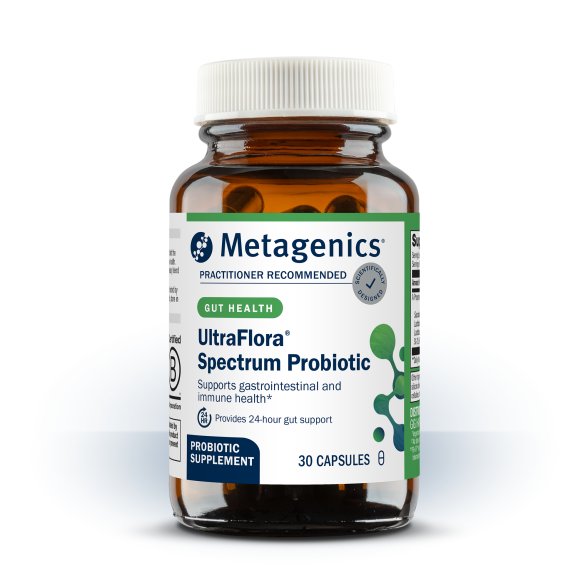
Synbiotic (probiotics + prebiotic) for gut and immune health
UltraFlora® 3-in-1 Daily Probiotic
4.5Triple action gut support with pre, pro, and postbiotic. Microbiome, gut barrier and immune health support.
UltraFlora® Triplebiotic with Akkermansia
4.4
Akkermansia Postbiotic for Weight Maintenance & Glucose Support. Clinically shown to help keep weight off.
UltraFlora® Healthy Weight with Akkermansia
4.2Daily 4g fiber + probiotic drink to help you stay regular and balanced
UltraFlora® Fiber, Prebiotic & Probiotic
4.3


