Protein & Sports Nutrition

“How much collagen should you take a day?” sounds like the kind of question that should have a one-line answer. One scoop. Ten grams. Problem solved. Right?
Not quite. The reality is, collagen dosage is more nuanced.
Collagen studied for skin hydration and elasticity may differ in amount from doses used for muscle recovery, healthy aging, joint comfort, or bone density support. The type matters too. Hydrolyzed collagen peptides, the most common form in powders and supplements, function differently from undenatured Type II collagen, linked to cartilage and joint function.
This complexity makes collagen confusing. Two people may both say they're "taking collagen," yet use different forms and doses with distinct goals and expectations.
And for many adults navigating perimenopause, menopause, and healthy aging, the question becomes less about whether collagen matters and more about how much actually makes sense for their goals.
In this article, we break down collagen dosage in a more practical, science-backed way to help you choose the right amount for your needs.
Choosing the Right Collagen Dose for Your Goals
While these dosage ranges offer a helpful starting point, the right collagen intake depends on your specific goals and how regularly you take it. Skin hydration, joint comfort, bone support, recovery, and healthy aging each require different forms, serving sizes, and timelines.
💡 Key takeaway: Consistency, and matching dosage to your goal, are most important. Think of collagen less like a quick-fix supplement and more like long-term structural support.
Collagen Dosage by Goal
Goal | Typical Daily Dose | Best Form | When Results May Appear |
Skin Hydration & Elasticity | 2.5 - 10 g | Hydrolyzed Type I & Type III Collagen Peptides | 8-12 Weeks |
Joint Comfort & Mobility | 5 – 10 g or 40 mg UC-II | Type II Collagen | 2-6 months |
Bone Density Support | ~5 g | Specific Collagen Peptides | Several Months+ |
Hair & Nail Support | 2.5 - 5 g | Multi-Collagen Peptides | 8-12 Weeks |
Perimenopause & Healthy Aging Support | 5 – 10 g | Multi-Collagen or Hydrolyzed Peptides | Ongoing |
Muscle Recovery & Active Aging | 10 - 15 g | Collagen Peptides + Protein Support | Ongoing |
Key Benefits of Collagen Supplementation
For Skin Elasticity, Hydration & Wrinkles
Skin support is the most common reason people begin taking collagen, particularly as collagen production naturally declines with age.
Research on hydrolyzed collagen peptides for skin health commonly falls within the 2.5–10 g per day range.
Lower doses may help support hydration and elasticity, while higher daily collagen intake is often used in studies examining wrinkles and other visible signs of aging.
Type I and Type III collagen are especially important here because they’re the primary collagen types found in skin structure and elasticity.
Most skin-related collagen studies show gradual changes over roughly 8–12 weeks of consistent use.1
💡 Key takeaway: Patience and consistency matter for visible results.
For Hair and Nail Support
Weak, thinning hair or brittle nails are the next most common reasons people start taking collagen supplements. Hair and nails are made primarily of keratin, not collagen. But collagen provides amino acids that help support the body's natural production of keratin. This is one reason collagen has become a popular part of many beauty and healthy-aging routines.
Research on collagen for hair and nails is still emerging, but some studies suggest collagen peptides may help support nail strength and reduce brittleness over time. Because both hair and nails grow slowly, consistent daily use is key, and visible changes may take several months.
💡 Key takeaway: Don't expect overnight results. Consistency is more important than taking larger doses when your goal is healthier-looking hair and stronger nails.

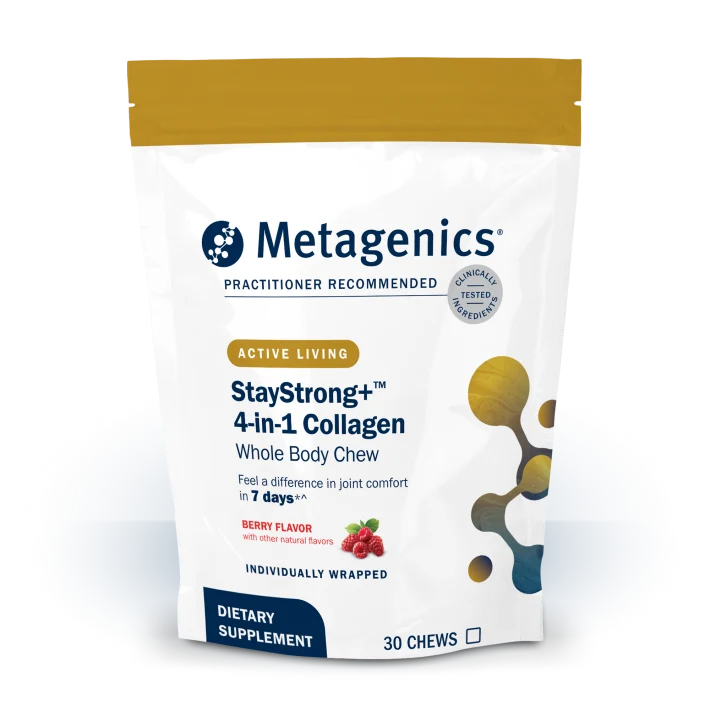
StayStrong+ 4-in-1 Collagen Whole Body Chew
Four types of collagen in one chew, supporting joints, movement, and skin.*
For Joint Comfort and Mobility
Joint support is where collagen dosing often becomes more individualized. Someone looking for everyday mobility support may approach collagen differently than an athlete, runner, or highly active adult who places repeated stress on connective tissue over time.
For general joint support, studies on hydrolyzed collagen peptides commonly fall within the 5–10 gram per day range, and are often used to support connective tissue, flexibility, recovery, and overall joint comfort. Some joint-focused supplements also include eggshell membrane, which naturally contains collagen, elastin, and connective tissue compounds.
Undenatured Type II collagen works differently. Often found in UC-II®, this form is typically taken in much smaller amounts, around 40 mg daily, because it works through an immune-mediated mechanism tied more specifically to cartilage support and joint function.2

StayStrong+ Joint and Muscle Powder
Collagen, creatine, and magnesium powder for strength and joint health.*
Different collagen forms can work very differently inside the body, which is why dosage recommendations don’t always look the same.
💡 Key takeaway: Always check your supplement’s type and intended use.
For Bone Density and Healthy Aging
Bone support conversations often become more relevant during perimenopause and post menopause, when both collagen production and bone mineral density begin declining more rapidly.
While calcium tends to get most of the attention in bone health conversations, collagen also plays an important structural role. Think of collagen as part of the internal scaffolding or framework that helps give bones flexibility and support. Without that collagen matrix, bones become more brittle over time.
Research on specific collagen peptides for bone support typically ranges from 5 to 10 grams per day, particularly in studies involving postmenopausal women and healthy aging.
Collagen also works best as part of a broader bone-support strategy rather than in isolation. Nutrients like vitamin D3, vitamin K, magnesium, and calcium help support the body’s ability to utilize and maintain bone tissue properly over time.
Bone support supplements are not a quick fix like some supplements that promise overnight results. Less about quick, visible changes; more about supporting structural health over time.
💡 Key takeaway: Expect gradual, long-term benefits for bones.
For Perimenopause and Menopause
Collagen becomes more relevant during perimenopause and menopause as estrogen levels drop, accelerating collagen decline.
In the early stages of perimenopause, visible changes can appear on the skin, with dryness, loss of elasticity, and thinning. As time goes on, collagen loss can also affect joints, connective tissue, recovery, and overall structural support.
Bone health also becomes increasingly important during this stage of life because declining estrogen accelerates bone loss and increases the long-term risk of osteoporosis.3 Collagen helps support the internal framework of bones, contributing to their strength and flexibility.
For women who are postmenopausal, it's also a good time to talk with your healthcare provider about a bone-support supplement to help maintain healthy bones as part of a comprehensive healthy-aging routine. This is why many women in midlife take a holistic approach to collagen, focusing on skin, mobility, strength, recovery, and healthy aging.
For Muscle Recovery and Aging
Once known primarily as a beauty supplement, collagen is now gaining attention for its role in supporting healthy aging, movement, and recovery after activity.
As we age, it's not just our muscles that need support. Tendons, ligaments, cartilage, and other connective tissues also change over time, which can affect how comfortably we move and recover after exerting ourselves. Collagen is a key structural protein found throughout these tissues, making it an important part of many active aging routines.
Not all collagen works the same way, though. Different collagen types support different structures throughout the body—from joints and connective tissue to skin and bones. Learn more about the different types of collagen and how to choose the right one for your goals.

StayStrong+ Brain and Body Collagen and Creatine Powder
A daily collagen and creatine powder that supports brain energy, lean muscle, and hair, skin, and nail health.*
How much collagen is safe to take?
With the benefits of collagen established, it’s equally important to understand whether you can take too much collagen. Let’s review safety considerations.
For most healthy adults, collagen supplements are generally well-tolerated when taken as directed. But taking significantly more than your body needs doesn’t necessarily translate into better or faster results.
Very large servings, for example, could contribute to feeling fullness, bloating, digestive discomfort, or heartburn, particularly with lower-quality formulations.
Collagen is also still a source of protein, which means overall intake matters, especially for people already following high-protein diets or layering multiple supplements into their routine.
Quality matters, too. The source, formulation, and bioavailability of collagen may ultimately matter more than simply increasing the scoop size.
💡 Key takeaway: Focus on quality, not quantity, for the best results. More collagen isn’t always better once you’re already within clinically studied ranges.
Types of Collagen and How They Affect Your Dose
Not all collagen supplements work the same way, which is part of why collagen dosage recommendations can vary so widely from one product to another.
Hydrolyzed Collagen Peptides
Hydrolyzed collagen peptides, the most common form found in powders and daily wellness supplements, provide amino acids such as glycine and proline, which help support connective tissue. When broken down into small amino acid chains, they facilitate easier absorption and greater bioavailability. Because hydrolyzed collagen functions primarily as a protein source and amino acid supply, dosages are typically measured in grams rather than milligrams.4 Most research on skin, hair, nails, recovery, and general connective tissue support falls within the 2.5–15 g/day range, depending on the goal.5
Rich in Types I and III collagen, bovine collagen sourced from cows is one of the most common sources used in collagen peptide supplements. Marine collagen, sourced from fish, is rich in Type I collagen and is often associated with skin-focused collagen goals.
Undenatured Type II Collagen
Undenatured Type II collagen (UC-II®) works differently. Often found in UC-II®, this form is typically measured in milligrams rather than grams because it acts through cartilage-signaling and immune-mediated mechanisms more specifically tied to joint function and cartilage support.
Chicken collagen is commonly used in supplements focused on Type II collagen and joint health, which is why many cartilage-support formulas center on this collagen type rather than standard collagen peptides.
That’s why a clinically studied dose may look surprisingly small, often around 40 mg daily, even though it serves a very different purpose than hydrolyzed collagen peptides.
Gelatin
Gelatin is essentially cooked collagen and is commonly used in foods, soups, gummies, and bone broth preparations. While it still contains collagen proteins, it’s generally considered less concentrated and less versatile than hydrolyzed collagen peptides for supplementation purposes.
When to Take Collagen for Best Results
Consistency is key. Stick with your collagen routine as part of a broader wellness approach to achieve lasting results.
For some, collagen becomes part of a morning routine mixed into coffee or smoothies. Others prefer taking it after workouts or in the evening alongside the rest of their supplements. In practice, the “best” time is usually the one that fits most naturally into your day.
The format matters less than the habit itself. Choosing between collagen powder and capsules often comes down to convenience, portability, and the level of dosage flexibility someone wants.
Collagen also relies on other nutrients; Vitamin C, which plays an integral role in collagen synthesis; zinc and copper, which help support connective tissue formation and repair.
Collagen is often paired with protein supplements and resistance training as part of a broader recovery for active adults.
💡 Key takeaway: Prioritize regular daily intake to see benefits.
How Long Until You Feel a Difference?
Collagen tends to work gradually rather than all at once, which is why consistency matters more than expecting immediate results.
What People Often Notice First
For many people, some of the earliest noticeable changes may involve skin hydration, nail strength, or reduced feelings of stiffness and recovery-related discomfort. These types of changes commonly occur within the first couple of months of consistent collagen intake.
Longer-Term Structural Support
Because bone health, mobility support, and recovery are tethered to the body's structural systems, some changes occur more slowly than others, with outcomes spreading over several months rather than just a few days or weeks.6
> Think of collagen less like a quick-fix supplement and more like long-term structural support.
Choosing a Quality Collagen Supplement
Not all collagen supplements are the same. Some collagen products prioritize large scoop sizes while offering little transparency around sourcing, formulation standards, or ingredient testing. Others focus more heavily on practitioner-grade quality, clinically studied ingredients, and bioavailability.
When comparing supplements, look for clear labeling, transparent ingredient sourcing, third-party testing, and formulations designed around specific wellness goals.
Conclusion
The right collagen dosage depends largely on what you’re hoping to support. Skin hydration, joint comfort, bone health, recovery, and healthy aging may all involve different collagen forms, serving sizes, and timelines.
And while collagen has become increasingly mainstream in wellness routines, more isn’t always better. The source, formulation, and intended purpose of a collagen supplement may matter far more than simply choosing the largest scoop size or highest gram count.
That nuance is part of what makes collagen both more complicated and more personalized than many people initially expect.
Consistency matters, too. Many collagen-related benefits develop gradually, especially when collagen is paired with strong overall nutrition, movement, resistance training, and long-term healthy-aging habits.
Used thoughtfully, collagen can become part of a broader approach to supporting connective tissue, mobility, structural health, and physical resilience over time.

About the Author
Metagenics Medical Education Team
Healthcare Practitioners & Scientists
Our team of licensed health practitioners, clinical scientists, and nutrition experts creates and reviews content to ensure every article reflects current research, clinical expertise, and our commitment to scientific rigor—so you can trust what you read.
References
Pu SY, Huang YL, Pu CM, et al. Effects of Oral Collagen for Skin Anti-Aging: A Systematic Review and Meta-Analysis. Nutrients. 2023;15(9):2080. Published 2023 Apr 26. doi:10.3390/nu15092080
Lugo JP, Saiyed ZM, Lau FC, et al. Undenatured type II collagen (UC-II®) for joint support: a randomized, double-blind, placebo-controlled study in healthy volunteers. J Int Soc Sports Nutr. 2013;10(1):48. Published 2013 Oct 24. doi:10.1186/1550-2783-10-48
König D, Oesser S, Scharla S, Zdzieblik D, Gollhofer A. Specific Collagen Peptides Improve Bone Mineral Density and Bone Markers in Postmenopausal Women-A Randomized Controlled Study. Nutrients. 2018;10(1):97. Published 2018 Jan 16. doi:10.3390/nu10010097
de Miranda RB, Weimer P, Rossi RC. Effects of hydrolyzed collagen supplementation on skin aging: a systematic review and meta-analysis. Int J Dermatol. 2021;60(12):1449-1461. doi:10.1111/ijd.15518
Al-Atif H. Collagen Supplements for Aging and Wrinkles: A Paradigm Shift in the Fields of Dermatology and Cosmetics. Dermatol Pract Concept. 2022;12(1):e2022018. Published 2022 Jan 1. doi:10.5826/dpc.1201a18
Ivaskiene T, Viskelis J, Streimikyte P, Savickaitė M, Mobasheri A, Kaspute G. Collagen supplementation and regenerative health: advances in biomarker detection and smart material integration. Front Nutr. 2025;12:1716166. Published 2025 Dec 11. doi:10.3389/fnut.2025.1716166
Browse Collagen Supplements
A daily collagen and creatine powder that supports brain energy, lean muscle, and hair, skin, and nail health.*
StayStrong+ Brain and Body Collagen and Creatine Powder
4.6Four types of collagen in one chew, supporting joints, movement, and skin.*
StayStrong+ 4-in-1 Collagen Whole Body Chew
4.3Collagen, creatine, and magnesium powder for strength and joint health.*
StayStrong+ Joint and Muscle Powder
4.3