
Kids Supplements & Vitamins
Support your kids’ growth, brain power, and immunity at every age.

- All Products (225)
- Brain & Cognitive Health (31)
- Bundle & Save (9)
- Digestion & Probiotics (48)
- Essential Wellness (73)
- Heart Health (47)
- Immune Health (69)
- Kid's Health (7)
- Liver & Detox (26)
- Magnesium (14)
- Men's Health (13)
- Omega-3s & Fish Oil (13)
- Pain, Bone & Joint (41)
- Protein & Sports Nutrition (27)
- Sleep (20)
- Stress, Mental Health (45)
- Vitamins & Minerals (44)
- Weight Management (42)
- Women's Health (43)
Multigenics® Chewable Multivitamin
Outrageous orange flavor
4.0Average Rating 4.0MetaKids® Multivitamin
Daily kids multivitamin with phytonutrients.
3.2Average Rating 3.2UltraFlora® Kids Probiotic
Supports digestive and immune health*
2.9Average Rating 2.9Omegagenics® Kids DHA
Chewable omega-3 support for healthy brain and eye function.*
5.0Average Rating 5.0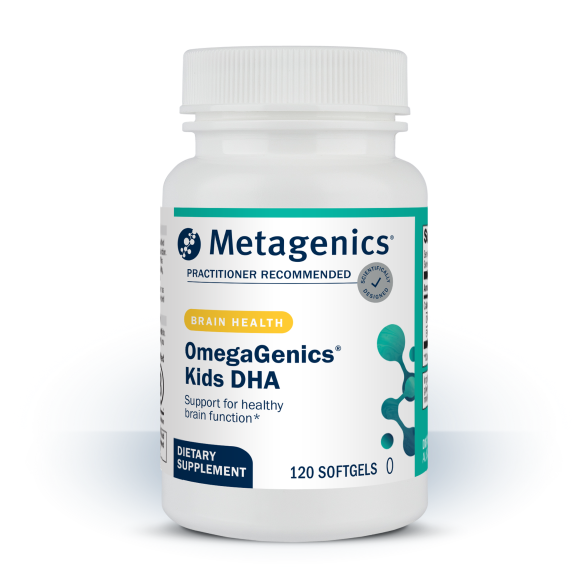
MetaKids® Nutrition Powder
Comprehensive nutrition designed for kids’ unique nutritional needs.
3.5Average Rating 3.5UltraFlora® Baby Probiotic
Daily gut and immune health support for infants and kids*
4.3Average Rating 4.3MetaKids® Vitamin D3
For healthy bone and immune support.*
5.0Average Rating 5.0


Kid's Health Articles
- Vitamins & Minerals
Best Time to Take Supplements: Probiotics, Multivitamins, and More
By Dr. Melissa Blake, ND


How to Choose the Right Kids Supplements
Before you shop for kids supplements, here is the good news: most kids who eat a varied diet get what they need from food. The American Academy of Pediatrics states that healthy children receiving a normal, well-balanced diet do not need vitamin supplementation.1
Real life does not always look like a balanced plate, though. Picky phases, busy mornings, sports schedules, and limited time outside can all leave gaps. The right children's supplements fill those specific gaps. They do not replace good food. Use this checklist to narrow things down.
- Start with the gap. Does your child skip vegetables, fish, or dairy? Spend most days indoors? The answer points you to the right product.
- Match the age. Check the age range on every label, and follow it. Chewables and soft chews carry a choking risk for younger children, which is why most are labeled for ages 3 or 4 and up.
- Pick a form your child will actually take. Drops, soft chews, chewable tablets, and powders all work. The best one is the one that becomes part of the routine.
- Check the dose. More is not better. The AAP warns that megadoses of vitamins A, C, or D can cause toxic effects in children, from nausea and rashes to headaches and occasionally more serious problems.1
- Store them like medicine. Chewable vitamins can look and taste like candy. Keep every supplement out of reach, especially products containing iron. Federal labeling rules require an iron warning because accidental overdose of iron-containing products is a leading cause of fatal poisoning in children under 6.2
- Talk with your pediatrician first, especially for infants, children with health conditions, or kids who take medication.1
Which Vitamins for Kids Does Your Child Actually Need?
Every child is different, but a few nutrients come up again and again in conversations between parents and pediatricians. Here is where most families start.
Daily Multivitamins for Picky Eaters
Picky eating can be extremely hard to avoid. A children's multivitamin works like a safety net for the days when the broccoli ends up on the floor. It covers a broad range of vitamins and minerals at once, so you are not guessing which one is missing. MetaKids® Multivitamin delivers 15 essential vitamins and minerals plus a fruit and vegetable blend in a soft chew for kids 4 and up.
For families who want one chewable for everyone, Multigenics® Chewable Multivitamin works for children 3 and older and adults.
Kids who need more than a vitamin can get 8 grams of plant-based protein, vitamins, minerals, and DHA in each serving of MetaKids® Nutrition Powder.
Vitamin D3 for Bone & Immune Support
Vitamin D helps the body absorb calcium, one of the main building blocks of strong bones, and the immune system needs it to do its job. Very few foods contain much vitamin D naturally, and kids who spend most of the day indoors may not make enough from sunlight. The recommended amount is 400 IU (10 mcg) a day for infants under one and 600 IU (15 mcg) a day for children 1 year and older.1,3
MetaKids® Vitamin D3 provides vitamin D3 (the same form your skin makes from sunlight) in an easy liquid drop for kids 4 and up, to be used as recommended by a healthcare practitioner. For infants, talk with your pediatrician about the right product and amount. Your pediatrician can also check your child's vitamin D level and help you decide what makes sense.
Omega-3 DHA for Brain Development
DHA is an omega-3 fat found in high levels in the brain and the retina (the light-sensing layer at the back of the eye). Kids get it mostly from fatty fish like salmon and sardines, which many children rarely eat. There is no official daily amount for DHA, so talk with your pediatrician about what fits your child's diet.4
OmegaGenics® Kids DHA offers a purified, fruit-flavored chewable softgel to support healthy brain function.* It is made from calamari oil, so skip it if your child has a shellfish allergy. MetaKids® Nutrition Powder also includes plant-sourced DHA.
Probiotics for Kids' Digestive Health
Probiotics are friendly bacteria that help keep the gut's community of microbes in balance. A child's gut is still developing, and gut-associated lymphoid tissue makes up close to 70% of the entire immune system, so gut health and immune health go hand in hand.5
Probiotic benefits depend on the exact strain, so look for strains that have been studied. UltraFlora® Kids Probiotic is a grape-flavored chewable with two clinically studied strains. In a six-month study of healthy children ages 3 to 5 conducted over the winter, this strain combination supported healthy immune function.7 For infants, UltraFlora® Baby Probiotic comes as easy oil drops you can add to a spoon, milk, or food.
Probiotics are generally well tolerated in healthy children. Always talk with your pediatrician before giving any probiotic to an infant, especially a baby born early or one with a health condition.6
Kid's Supplements Frequently Asked Questions
The best way to support your child's immune system is to get the basics right every day. That means enough sleep (9 to 12 hours a night for ages 6 to 12, 10 to 13 hours for ages 3 to 5, including naps), meals with fruits, vegetables, and protein, active play, and regular handwashing. Nutrients such as vitamin D and zinc support normal immune function, and a multivitamin or vitamin D3 can fill gaps when food falls short.3,9 Our guide on how to support your child's immune system covers sleep, activity, hydration, and diet in more detail.
Vitamin D, vitamin C, vitamin A, and zinc (a mineral) are the nutrients most closely tied to healthy immune function. Vitamin D and zinc both play a role in how the immune system responds to bacteria and viruses.3,9 Food comes first: citrus, berries, and peppers for vitamin C, and meat, beans, and nuts for zinc. For kids, a daily multivitamin covers several of these at once, and a vitamin D3 drop helps when sun and diet fall short. Probiotics are not vitamins, but they support immune health from the gut.5 Shop immune support for kids above.
The best multivitamin for kids is one made for your child's age, in a form they will take every day, with doses close to the recommended amounts instead of megadoses.1 Look for quality testing and a clean ingredient list. MetaKids® Multivitamin is a soft chew with 15 essential vitamins and minerals for kids 4 and up. Multigenics® Chewable Multivitamin is a single chewable for children 3 and older and adults. Read our guide to kids vitamins for more help choosing.
Probiotics are generally well tolerated by healthy children and can support digestive and immune health.6 The key is choosing strains that have been studied in kids, since benefits are strain-specific. UltraFlora® Kids Probiotic uses two strains studied together in children ages 3 to 5.7 Talk with your pediatrician first if your child is an infant, was born early, or has a health condition.6 Learn more in our article on probiotics for children.
Yes. Every product in our kids supplements line is made in GMP- and NSF-certified facilities. Those certifications apply to the facilities and quality processes behind each product, from multivitamins and vitamin D3 drops to probiotics and DHA.
Independent auditors inspect these systems against FDA Good Manufacturing Practices [and NSF/ANSI 455-2 and USP GMP audit standards]. Every batch is tested for identity, purity, strength, and stability at multiple stages of production, from raw ingredients to the finished product. Products are also screened for contaminants such as heavy metals and microbes.
For parents, that means the amount on the label is the amount your child gets, with no unwanted extras. This matters even more for kids, because the right dose is smaller and accuracy counts.
References
1. American Academy of Pediatrics. Where we stand: vitamin supplements for children. HealthyChildren.org. Accessed October 8, 2026. https://www.healthychildren.org/English/healthy-living/nutrition/Pages/Where-We-Stand-Vitamins.aspx
2. Food labeling: warning and notice statements. Iron-containing products. 21 CFR 101.17(e). https://www.ecfr.gov/current/title-21/chapter-I/subchapter-B/part-101/subpart-A/section-101.17
3. National Institutes of Health, Office of Dietary Supplements. Vitamin D: fact sheet for consumers. Accessed October 8, 2026. https://ods.od.nih.gov/factsheets/VitaminD-Consumer/
4. National Institutes of Health, Office of Dietary Supplements. Omega-3 fatty acids: fact sheet for consumers. Accessed October 8, 2026. https://ods.od.nih.gov/factsheets/Omega3FattyAcids-Consumer/
5. Vighi G, Marcucci F, Sensi L, Di Cara G, Frati F. Allergy and the gastrointestinal system. Clin Exp Immunol. 2008;153(suppl 1):3-6. doi:10.1111/j.1365-2249.2008.03713.x
6. National Center for Complementary and Integrative Health. Probiotics: what you need to know. Accessed October 8, 2026. https://www.nccih.nih.gov/health/probiotics-what-you-need-to-know
7. Leyer GJ, Li S, Mubasher ME, Reifer C, Ouwehand AC. Probiotic effects on cold and influenza-like symptom incidence and duration in children. Pediatrics. 2009;124(2):e172-e179. doi:10.1542/peds.2008-2666
8. Paruthi S, Brooks LJ, D'Ambrosio C, et al. Recommended amount of sleep for pediatric populations: a consensus statement of the American Academy of Sleep Medicine. J Clin Sleep Med. 2016;12(6):785-786. doi:10.5664/jcsm.5866
9. National Institutes of Health, Office of Dietary Supplements. Zinc: fact sheet for consumers. Accessed October 8, 2026. https://ods.od.nih.gov/factsheets/Zinc-Consumer/